Peeling finish is one of the more upsetting things to find on a hardwood floor, especially when the floor was only recently refinished or recoated. Clear flakes come up along a wall, a strip of finish lifts in a doorway, or a whole patch comes away in a sheet. People often assume the finish was cheap. Usually it was not. Hardwood floor finish peeling is almost always a bonding problem, and the cause is something that sat between the coats or got to the finish before it had cured.
Peeling Is Not the Same as Wear
It helps to know which problem you have. Worn finish thins out gradually in traffic lanes, in front of the sink and at doorways, until the wood shows through dull and gray. That is normal aging, and a recoat before it reaches bare wood is the fix.
Peeling looks different. The finish lifts as a film, with sharp edges, and often in places that do not get much traffic at all, like along baseboards or in a corner. Underneath, there is usually still finish, or the bare wood looks clean, as if the top layer never stuck. That points to the bond, not the wear.
Cause One: Residue Under a Recoat
This is the cause we see most. A new coat of finish has to bond to the old one, and anything sitting on the old finish gets in the way. The usual culprits come from the floor care aisle:
- Oil soaps, which leave a film that builds up with every cleaning.
- Acrylic shine restorers and mop-on polishes, which lay down a soft layer nothing bonds to.
- Wax, including paste wax from decades ago that soaked into an old floor.
- Furniture polish and sprays that drift onto the floor, some of which contain silicone.
The failure does not show up on day one. The recoat looks fine, then weeks later it starts to flake. This is why we ask what has been used on a floor before quoting a recoat, and why a floor with a history of wax or polish is often sanded instead. Screen and recoat covers which floors qualify, and cleaning hardwood floors without wrecking the finish covers what to use instead.
Cause Two: The Coats Did Not Bond to Each Other
Each finish has a recoat window on its label. Put the next coat on within it and the coats bond. Wait too long and the previous coat has hardened past the point where the next one will grab, so it has to be lightly abraded first. Skipping that step, or abrading unevenly, leaves areas where the top coat is sitting on the one below instead of bonding to it. Dust or debris left on the floor between coats does the same thing in spots.
Applying finish outside the temperature and humidity the label calls for can also weaken the bond. A cold room, a sticky summer day with the air off, or a coat put down too thick can all contribute. The best time of year to refinish hardwood floors covers how the seasons affect drying.
Cause Three: Finishes That Do Not Mix
Not every finish goes over every other finish. Polyurethane will not bond over wax. A floor finished in hardwax oil cannot be coated with polyurethane without sanding to bare wood first. Some older or unusual finishes are not friendly to modern products either. When we are not sure what is on a floor, we test before committing a whole room. Water-based vs oil-based polyurethane covers the common finish systems.
Cause Four: Moisture
Water that gets under a finish lifts it. A leak, a dishwasher that has been seeping, a plant pot, a pet accident that was not found right away, or moisture coming up from below can all turn the finish white or cloudy and then make it lift and flake. In this case the finish is the symptom, not the problem, and the source has to be found and fixed before any refinishing makes sense. Water damaged hardwood floors and pet urine stains on hardwood floors cover those situations.
Cause Five: Tape and Rugs Too Soon
A fresh finish can feel dry long before it has cured. Painter's tape stuck to it in that stretch can pull the finish right off when it comes up, and the same goes for tape used to hold down protective paper or a rug pad. If a contractor or painter is working after your floors are done, tape belongs on the walls and trim, never on the new floor. Our guide on how to prepare for hardwood floor refinishing covers the order for furniture and rugs after the last coat.
What Not to Do
- Do not put another coat over it. New finish over peeling finish only bonds to something that is already letting go, and it will peel with it.
- Do not pull at the edges. It is tempting, but it usually just makes the area bigger.
- Do not reach for a polish to hide it. A shine product over a peeling area adds one more layer of residue the eventual repair has to remove.
How a Peeling Floor Gets Fixed
The fix depends on how far the failure goes and what caused it. If it is confined to one area with a clear cause, such as tape pulled off one strip or a single spill, the loose finish can sometimes be removed and the room recoated, after testing that the rest of the finish is holding well. Polyurethane does not spot repair invisibly, though, so the new coat usually goes over the whole room, not just the patch.
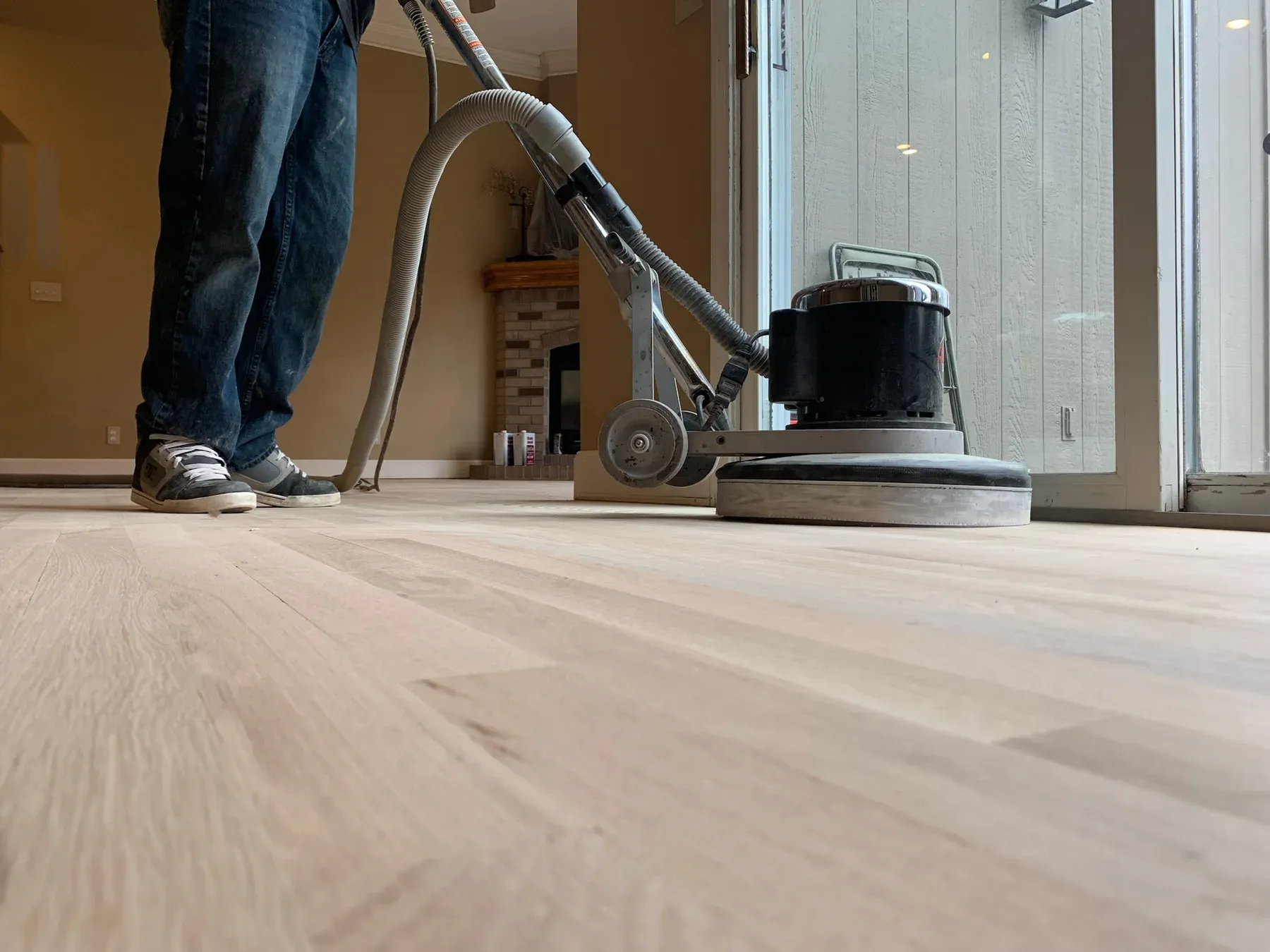
If the peeling is widespread, or the cause is residue or wax across the floor, the reliable fix is a full sanding to bare wood and a new finish system from scratch. That removes the contamination along with the failed finish. Our hardwood floor sanding page covers that process, and we run our dustless system on every sanding job.
Get It Looked At
We repair and refinish floors with failed finishes across the metro, including Kansas City, Shawnee, Lenexa and Parkville. See our hardwood floor refinishing and recoating pages for how each job works. Get a free estimate, tell us what has been used on the floor, and we will tell you straight whether it is a recoat or a sanding.
Get a Free Estimate
Have a floor you want looked at? We give honest, no-pressure estimates across the Kansas City metro.