Most of the time spent planning a refinish goes into stain color. The clear coats that go over the color get decided in about a minute, usually with the words "whatever you normally use." That is backwards. The stain is what you see on day one. The finish decides what the floor looks like in year ten, how it handles dogs and kitchen chairs, and how long you are living out of half the house while it cures.
The real choice for most homes is water-based vs oil-based polyurethane, with hardwax oil as a third option worth understanding. None of them is the best finish. Each one is the right answer for a different floor and a different household.
What a Floor Finish Actually Does
Polyurethane is a film finish. It sits on top of the wood as a clear, hard layer, and that layer takes the wear so the wood does not. Shoes, grit, chair legs and dog nails are scratching the film, not the oak. When the film gets dull it can be renewed with a screen and recoat, and the wood underneath never gets touched.
Water-based and oil-based polyurethane both work this way. The difference is in what carries the resin, and that changes the color, the smell, the drying time and the way the floor ages.
Oil-Based Polyurethane
This is the finish on most floors refinished in Kansas City over the past several decades, and it is the reason so many older oak floors have that warm amber glow.
- Color. It goes on with an amber tone and keeps deepening for years. Over a natural or brown-stained red oak floor, that warmth is often exactly what people want.
- Build. Each coat lays down a fairly thick film, so a floor typically gets fewer coats than it would with a water-based product.
- Drying and cure. Slow. Coats usually need to dry overnight, so the coating stage runs over several days, and the full cure that gives the film its final hardness takes weeks rather than days.
- Odor. Strong solvent fumes while it goes down and while it dries. Plenty of families choose to sleep somewhere else for a few nights.
The trade-off to be honest about is the ambering. It looks rich over warm colors. Over a gray, white or very pale floor it turns the color yellow, and it keeps going after we have left.
Water-Based Polyurethane
Water-based finishes used to have a reputation as the weaker option. The better modern products have earned their way past that, and they are now the usual choice when the color needs to stay where you put it.
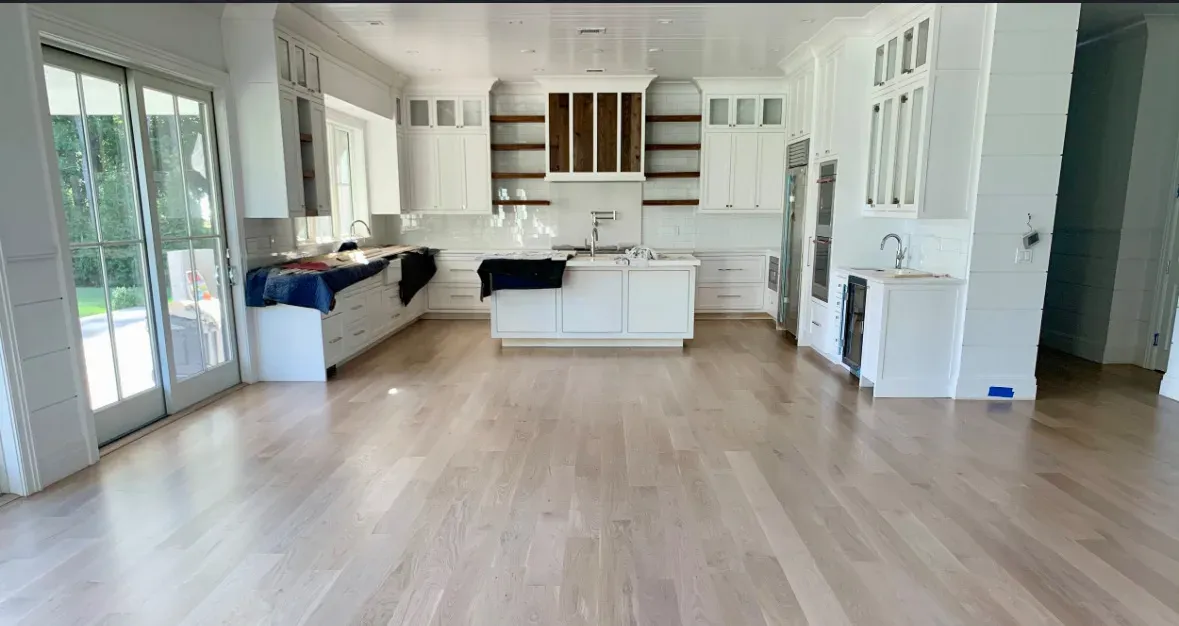
- Color. Clear going on and clear years later. It does not amber, which is why it is the standard choice over white oak, natural maple and any gray or pale stain.
- Build. Thinner coats, so a floor gets more of them to reach the same protection.
- Drying and cure. Fast. Coats dry in hours, more than one can often go down in a day, and the floor reaches full cure far sooner than an oil-based floor does.
- Odor. Mild, and it clears quickly. Most families stay in the house through the whole job.
Not all water-based finishes are equal, and this matters more than the label on the category. The single-component products sold at hardware stores are a different thing from the commercial-grade two-component finishes, which are mixed with a hardener right before they are applied and cure to a much tougher film. When someone tells you water-based finish did not hold up on their floor, it is worth asking which kind it was.
One thing surprises people: a clear water-based finish over raw red oak can look paler and a little flatter than expected, because nothing is adding warmth. If you want natural red oak to look the way it does in older homes, that warmth has to come from somewhere, either from an oil-based finish, a sealer chosen for that purpose, or a light stain.
Which One Is More Durable?
This is the question everyone asks, and the honest answer is that a quality product of either type, applied properly over a well-sanded floor, protects a home for years. The gap between a good product and a cheap one is wider than the gap between oil and water.
They do wear differently. Oil-based film is a little softer and more flexible, so it tends to dent with the wood and show wear as gradual dulling. A two-component water-based film is harder and resists scuffing well, which is why it gets used in restaurants and shops, including our own commercial hardwood flooring work. Neither one is scratch-proof. A dragged refrigerator or a rock stuck in a shoe sole will mark any site-applied finish ever made.
What decides how long a finish lasts in a real house is mostly what happens after we leave: mats at the doors, felt under the chairs, the right cleaner, and a recoat before the film wears through. The cleaning guide and how often to recoat cover that side.
Living Through the Job
For a lot of households this is the deciding factor, and it should be weighed honestly rather than treated as an afterthought.
With a water-based finish, you can usually walk the floor in socks within hours of the last coat, and the house never really smells like a job site. With oil-based, plan on more days with rooms closed off, a stronger smell that lingers, and a longer wait before life goes back to normal. If someone in the house is pregnant, has asthma, or is simply sensitive to fumes, that usually settles the question. It pairs naturally with dustless refinishing for the same reason.
Two rules apply to both. Furniture goes back carefully, lifted rather than dragged, with felt pads on. And area rugs stay off until the finish has fully cured, because a rug laid too early traps solvents and can leave a permanent outline in the film. We give you the specific dates for your product when the last coat goes down.
Sheen Is a Separate Decision
Matte, satin, semi-gloss and gloss are available in both finish families, and sheen has nothing to do with how tough the film is. It has everything to do with what the floor shows.
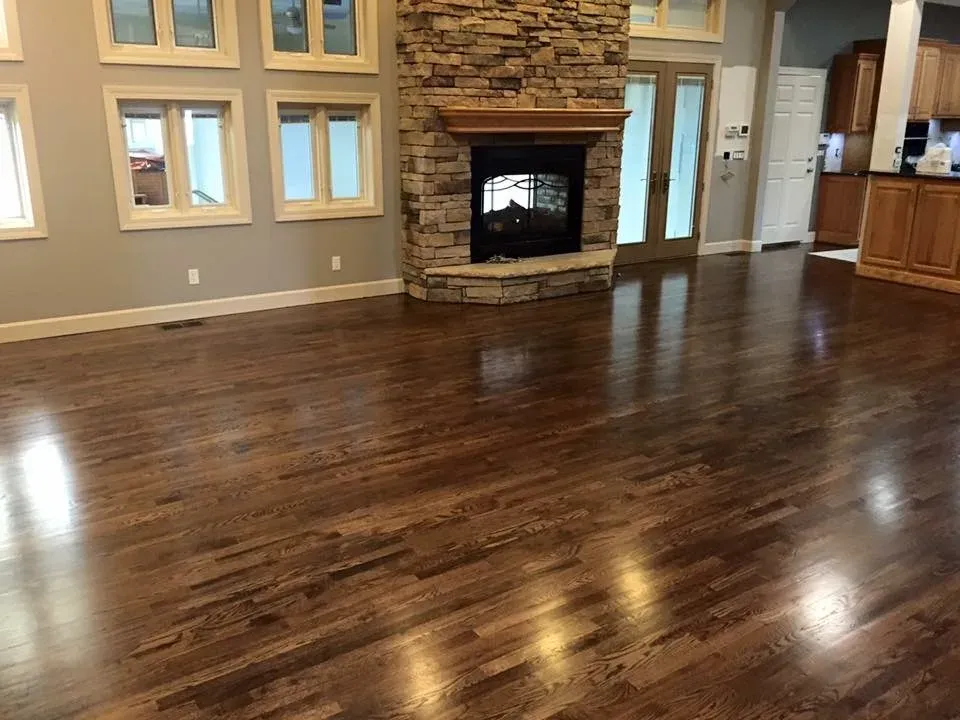
The floor at the top of this page is a dark stain under a high-sheen finish. It is a striking look, and it is also the most demanding combination there is. A glossy dark floor reflects every window, which means it also shows every footprint, every bit of dust and every fine scratch. Satin and matte scatter the light instead, and the same scratches all but disappear. For houses with kids and dogs we nearly always steer toward satin or matte, and the dogs and hardwood guide explains why sheen matters more than most people think.
Where Hardwax Oil Fits
Hardwax oils are not a film. They soak into the top of the wood and harden there, leaving a flat, natural surface that looks and feels like bare wood rather than wood under a clear coat. They suit white oak and wide plank floors particularly well.
The appeal beyond the look is repair. A worn or scratched patch can be cleaned and re-oiled by itself and blended in, which polyurethane does not allow. The cost is upkeep. These floors want the manufacturer's own cleaner and a periodic maintenance coat, and they are less forgiving of standing water and neglect than a film finish. They reward an owner who will look after them and disappoint one who will not.
One practical warning: a floor finished in hardwax oil cannot simply be coated over with polyurethane later. Changing systems means sanding back to bare wood.
Finishes You May Already Have
What is on your floor now affects what can go on next.
- Wax, shellac or old varnish. Common on floors that have not been refinished in many decades. New polyurethane will not bond over wax, so these floors need a full sanding rather than a recoat.
- Factory finish. Prefinished boards carry a very hard coating cured under ultraviolet light. Some can be recoated after the right preparation and some resist it, as covered in prefinished or site-finished.
- Polish or shine restorer on top of anything. Store-bought acrylic polishes stop a new coat from bonding. We test for them before quoting a recoat.
You may also hear about acid-cured and moisture-cured finishes. Both are extremely hard, and both give off fumes strong enough that they are rarely a sensible choice for an occupied home.
How We Help You Choose
Four questions sort out almost every floor:
- What color do you want in five years? Pale, gray or neutral means water-based. Warm and traditional leaves both options open.
- What species is it? White oak and maple usually look best under a clear finish. Red oak is more flexible. Our oak floors page covers how to tell which oak you have.
- How long can the rooms be out of use? If the answer is "as little as possible," water-based wins.
- How much upkeep will you really do? If the honest answer is "not much," choose polyurethane in satin over a hardwax oil.
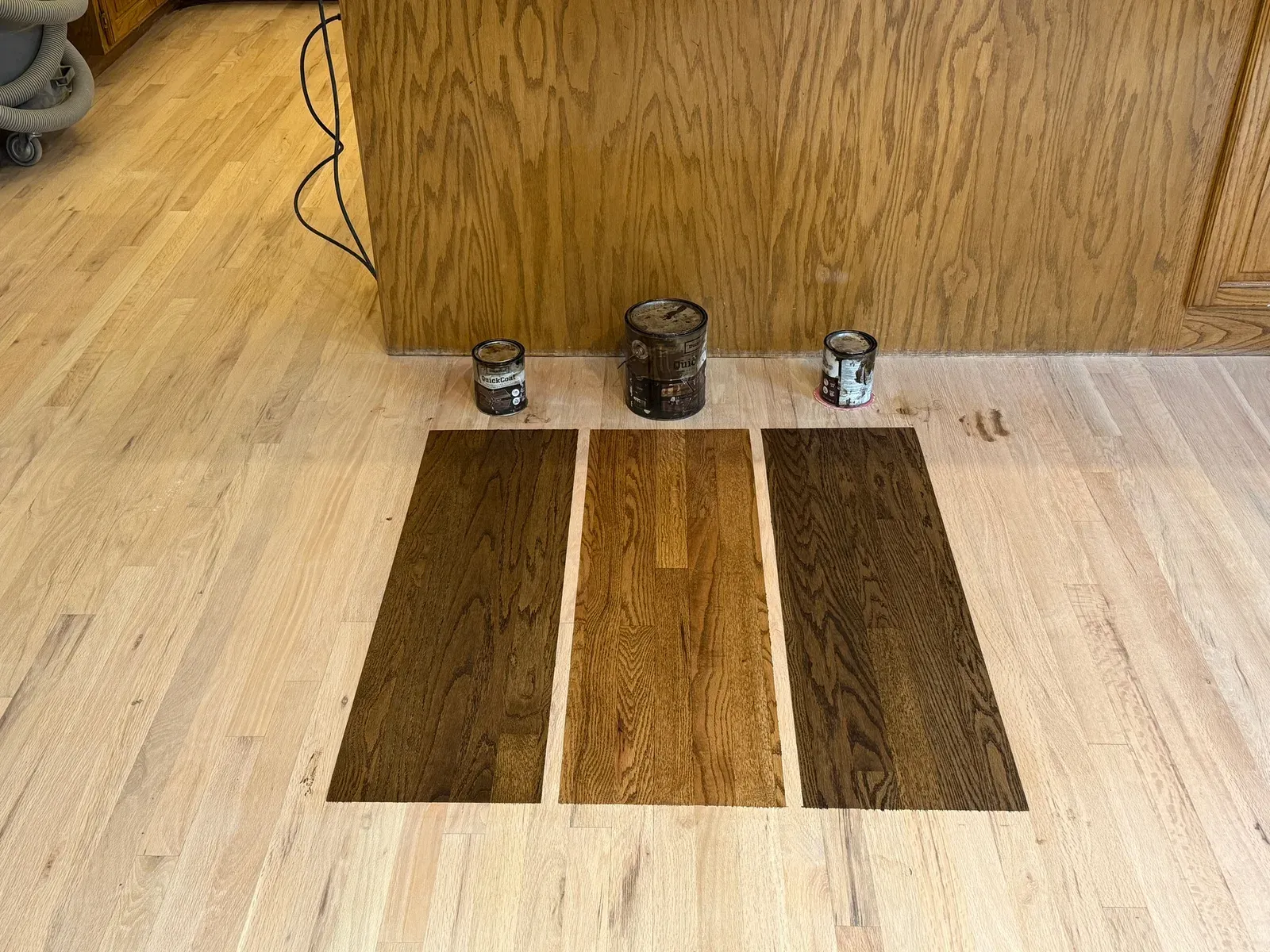
When we sample stain colors on your sanded floor, we put the actual finish over the samples, because a color under oil-based poly and the same color under water-based are two different colors. The staining guide explains how that sampling works, and our wood staining and custom finishes and hardwood floor refinishing pages cover the services themselves.
We finish floors across the metro, from Kansas City to Overland Park and Liberty. If you are planning a refinish and cannot decide what should go on top, get a free estimate and we will walk you through the options on your own floor.
Get a Free Estimate
Have a floor you want looked at? We give honest, no-pressure estimates across the Kansas City metro.