Scratches are what people worry about when a dog moves in. Urine is what actually costs them boards. A spot that gets found the same day usually wipes up with no harm done. A spot that sat behind a couch, under a rug or in the corner an old dog favored is a different story, and it is one of the most common reasons we get called out to look at a floor.
Here is a straight explanation of pet urine stains on hardwood floors: why they turn the color they do, what cleaning and sanding can and cannot do about them, and how a floor gets put right when the stain has gone too deep.
Why Urine Does More Damage Than a Spill
A finished hardwood floor handles a glass of water fine, because the finish keeps it on the surface long enough to wipe up. Urine gets past that defense for a few reasons:
- It sits. Nobody sees it for hours, sometimes days. Every hour it sits is time for it to work through worn finish and into the wood.
- It finds the seams. The finish bridges the joints between boards, but that film is thin there and cracks as boards move with the seasons. Liquid runs into the joints and wicks down the edges of the boards, which is why urine stains so often look darkest along the seams.
- It repeats. Pets go back to the same spot. One accident a floor can survive. The same corner every week for months is a stain that has been built up layer by layer.
- Rugs hide it. A rug soaks it up and holds it against the floor, so the wood stays wet far longer than it would bare, and nobody knows until the rug moves.
Why the Stains Turn Black
Most Kansas City floors are oak, and oak is full of natural tannins. As urine breaks down it gives off ammonia, and ammonia reacts with tannin and darkens the wood. That is not a guess about your floor in particular. Furniture makers have used ammonia fumes on purpose for generations to darken white oak, a process called fuming. A pet accident does the same thing, just in a spot nobody asked for.
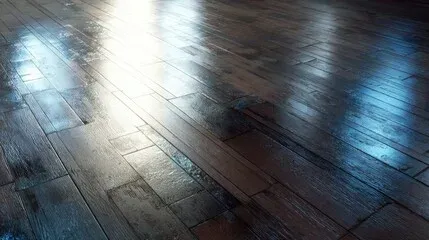
That is why urine damage on oak goes gray, then brown, then black, and why it reaches deeper into the wood than a plain water stain usually does. The color is not sitting on top of the board. It is a chemical change in the wood fibers themselves, as deep as the liquid went.
Reading the Stain
The color and the location tell you a lot before anyone touches the floor:
- A white or cloudy patch. Moisture trapped in the finish. That is a finish problem, not a wood problem, and it often fixes with a recoat or a sanding of that area.
- Light gray or tan, no smell. The wood is stained near the surface. A full sanding has a real chance of removing it.
- Dark brown or black, especially along the board edges. The stain has followed the seams down into the board. Sanding will lighten it at best.
- Black boards that feel soft, raised edges, or a smell you notice on humid days. The urine has reached the subfloor. The fix goes below the boards you can see.
Pet bowls, plants and leaky door thresholds leave stains that look a lot like urine, so the location matters too. Our guide to water damaged hardwood floors covers the stains that come from water instead.
What Cleaning Can Do
For a fresh accident on a floor with a sound finish, the answer is simple: blot it up, wipe the spot with a damp cloth and a cleaner made for finished wood floors, and dry it. An enzyme cleaner made for pet accidents helps break down what causes the odor, as long as the label says it is safe on finished wood and you do not leave it pooled on the floor.
Skip the steam mop, skip soaking the area, and skip anything that promises to bleach the stain out. On a finished floor, household peroxide and bleach mostly sit on top of the finish and do little to a stain that is underneath it. On bare wood, they can lighten the stain and leave a pale ring around it that is just as noticeable. Once a stain is in the wood, cleaning is about stopping the smell, not removing the color.
What Sanding Can Do
Sanding removes the finish and a thin layer of the wood, so it takes anything that is in that top layer with it. If the stain only went that far, a full refinish can make it disappear.
The trouble is that urine rarely stops there. Because it runs down the seams and works into the fibers, a dark stain usually goes deeper than any sanding should. A solid floor only has so much wood above the tongue, and spending a big share of it chasing one spot leaves the whole floor with less life in it. When we are not sure how deep a stain goes, we sand that area first and look before deciding, rather than guessing.
There are wood bleaches made for this kind of stain, and in the right case they lighten it. In our experience they rarely make a dark urine stain disappear, and they can leave the treated boards a different color from the rest of the floor once the finish goes on. We will tell you honestly if we think it is worth trying on your floor. Most of the time, the clean fix is new wood.
When the Boards Come Out
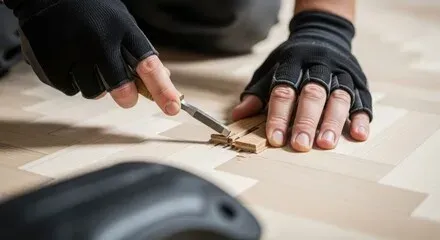
A stained section does not mean a new floor. The affected boards are cut out, new boards of the same species and width are woven in with the joints staggered like the original, and then the whole area is sanded and finished together so it reads as one floor. That is everyday work for our hardwood floor repair crew.
Matching is the part that takes skill. Old oak has aged under its finish and new oak has not, so the repair is planned with the refinish, not bolted on separately. Patching an old floor without a visible seam covers how that blending works. On a floor that needs refinishing anyway, the repair disappears into the job.
Do Not Forget the Subfloor and the Smell
If the stain went all the way through, the subfloor underneath has been soaked too, and that is usually where a lingering smell lives. Laying fresh boards over it traps the problem under a nice new floor, and on a muggy Kansas City summer day the odor can come right back up through the seams.
When the boards come up, we look at what is underneath. A sound subfloor with staining gets cleaned, dried and sealed with a stain and odor blocking primer before new wood goes down. A section that has gone soft gets cut out and replaced. It is not glamorous, but it is the difference between fixing the stain and fixing the problem.
Protecting the Floor Going Forward
- Keep the finish intact. A worn finish lets liquid straight into the wood. A recoat before the finish wears through is the cheapest protection a pet household can buy, and how often to refinish or recoat covers the timing.
- Watch the usual spots. Back doors, corners, the area by the bed of an older dog, and wherever the litter box sits. A washable mat in those spots is cheap insurance.
- Choose rug pads made for hardwood. Some rubber and plastic backings trap moisture or react with the finish. A pad made for wood floors lets the floor breathe and is easy to lift and check.
- Lift rugs now and then. If a pet has been having accidents, the rug is the first place to look.
For the scratches that come with dogs, as opposed to accidents, dogs and hardwood floors covers what actually prevents them.
Getting a Straight Answer
We look at pet-stained floors across the metro, including Kansas City, Overland Park and Lee's Summit. We will tell you whether a stain will sand out, whether boards need to come out, and whether the subfloor needs attention, and we will not replace boards that a sanding would have saved. Get a free estimate and we will take a look.
Get a Free Estimate
Have a floor you want looked at? We give honest, no-pressure estimates across the Kansas City metro.