Most of what makes a refinish go well happens on the floor: the sanding, the stain and the coats of finish. But a surprising amount of what makes it go smoothly happens before anyone unloads a sander. A house that is ready on day one keeps the schedule tight, keeps your belongings safe and keeps you from being stranded on the wrong side of a wet floor.
Here is how to prepare for hardwood floor refinishing, in the order it comes up.
A Week or Two Before: Make the Plan
Start with where everyone will be. Rooms being refinished are off limits from the first sanding pass until the finish is dry, and during finish coats you cannot walk across them at all. Think through:
- How you get around. If the work covers the front hall, the kitchen or the only route upstairs, you need a plan for reaching bedrooms, bathrooms and the door you will use. Sometimes the work is sequenced so a path stays open. Sometimes the honest answer is a couple of nights elsewhere. We talk through the order of rooms when we quote the job.
- The kitchen. If the kitchen floor is included, the refrigerator and other appliances may need to come out, and you will be without the kitchen for part of the job. Plan simple meals and stock a cooler or a fridge in another room.
- Pets. Dogs and cats should be out of the work area for the whole job, and ideally out of the house during sanding and finishing. Paw prints in a fresh coat are a common way a perfect floor gets a do-over. Boarding, a friend's house or a closed-off room far from the work all work.
- Anyone sensitive to dust or odor. Our dustless system collects dust at the machine, and water-based finishes carry little odor, but people with asthma, newborns or chemical sensitivity may still be more comfortable away while finish goes down. Oil-based finishes have a much stronger smell for longer.
- Other trades. If you are painting, have the walls done before the floor. Painting after means drop cloths, ladders and drips on a brand new finish. Plan to touch up baseboards afterward, since the edges of the floor work can scuff them.
A Few Days Before: Clear the Rooms
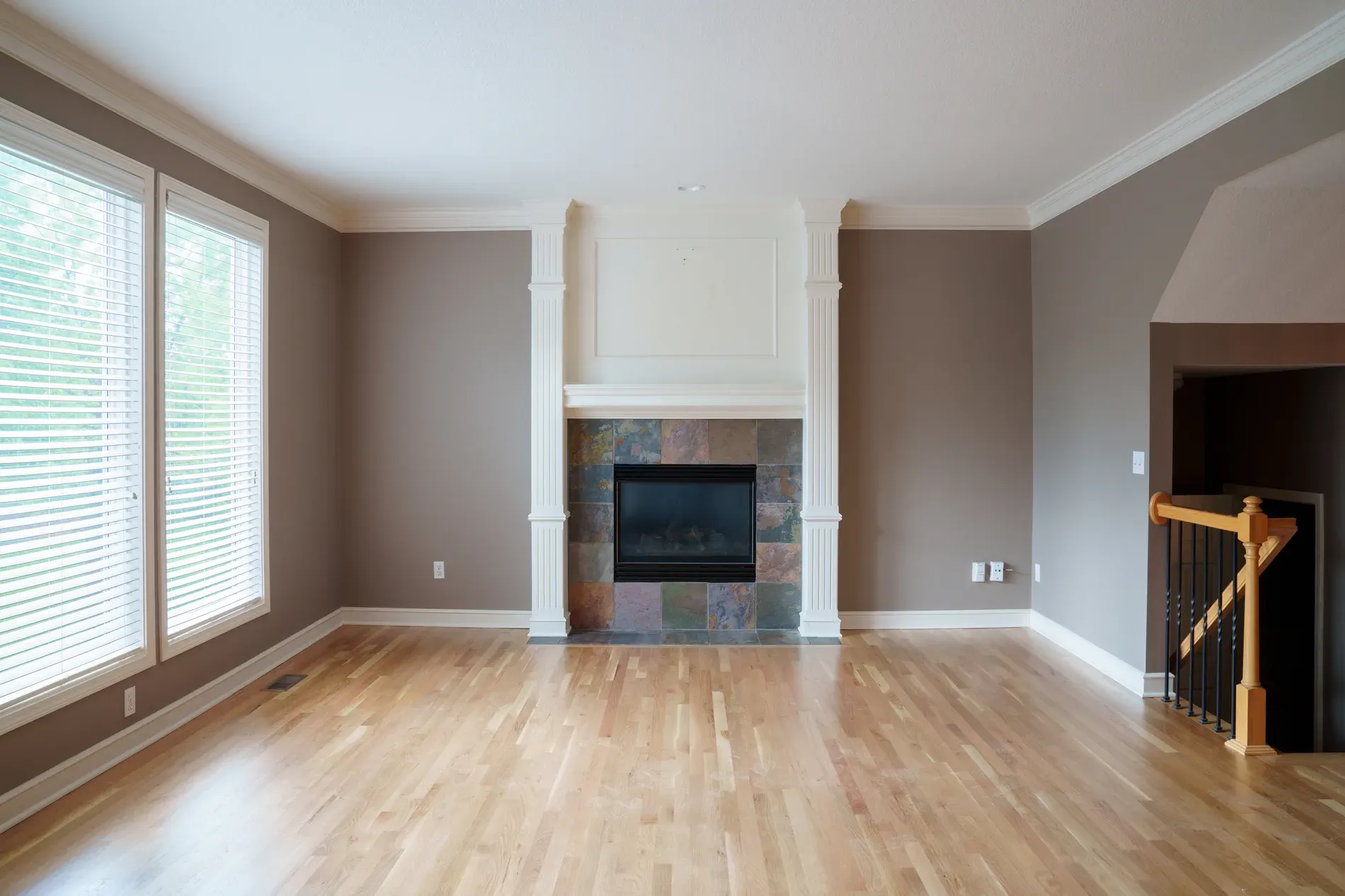
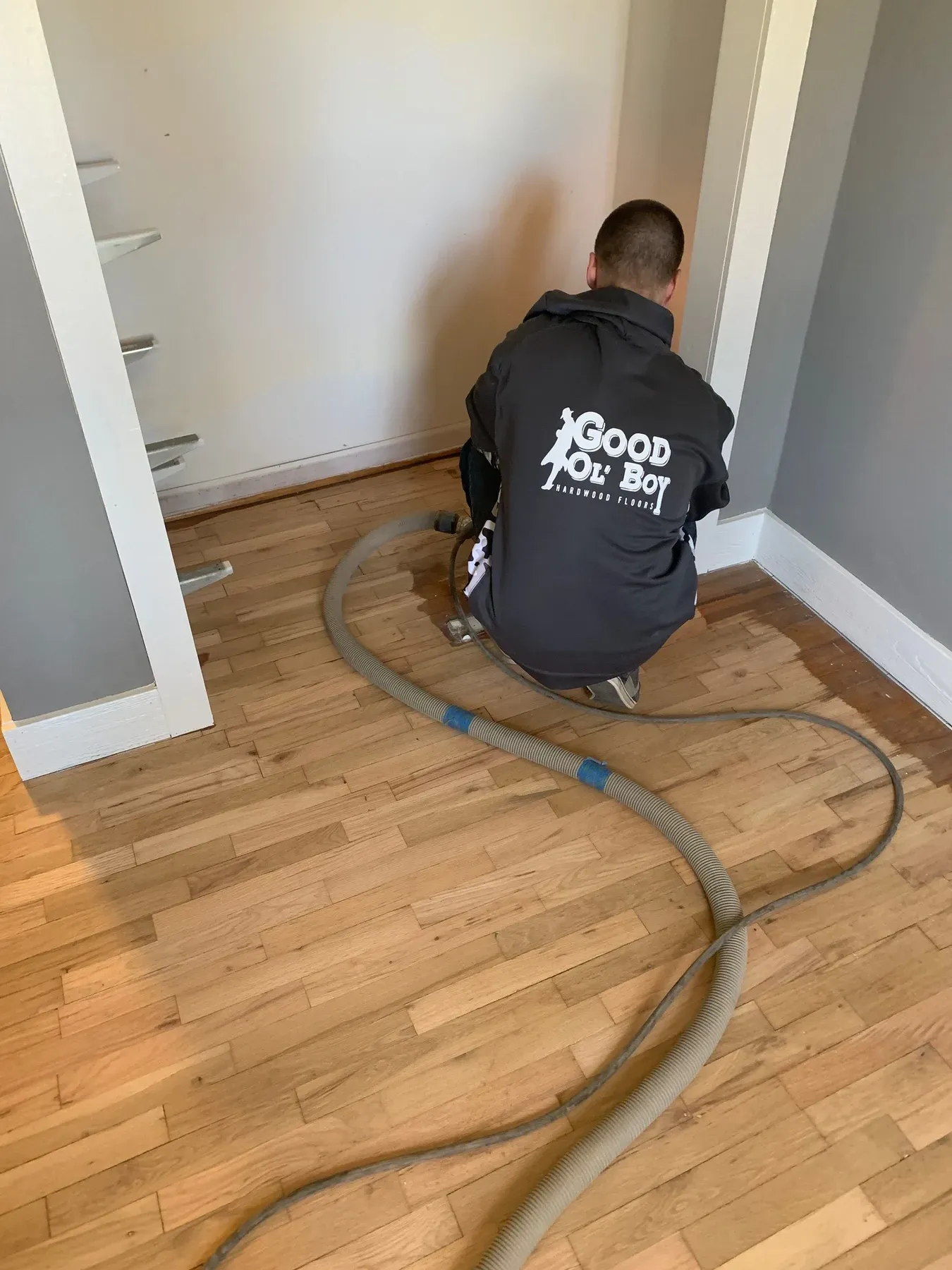
The floor has to be completely empty for sanding, wall to wall, and that includes closets if they are part of the job.
- Furniture and rugs. Ask whether moving furniture is included in your quote and what will be moved. Either way, empty dressers, bookcases and cabinets yourself, since furniture is moved empty, and handle anything valuable, fragile or sentimental on your own.
- Closets. Shoes, boxes, laundry baskets and anything stored on the closet floor need to come out. Hanging clothes can usually stay if they clear the floor, but long coats and dresses should be moved so they are not brushing a wet finish.
- Walls and shelves. Sanding machines put some vibration through the house. Take down pictures, mirrors and anything fragile on shelves in the work rooms and the rooms right next to them.
- Electronics and cords. Unplug and remove TVs, computers and speakers, and clear cords off the floor.
- Window treatments. Long curtains that touch the floor should be tied up or taken down so they stay out of the finish.
- Floor vents. Leave the registers in place. We handle covering or removing them as part of the job.
If you have baseboard shoe molding or quarter round, it may need to come off for the edging work and go back on afterward. Tell us at the estimate if you were planning new trim, because that changes the order of work.
Heat, Air and Pilot Lights
Finishes are made to go down and cure within a certain temperature and humidity range, and Kansas City can push both ends of it. Keep the furnace running in winter and the air conditioning running in summer so the house stays at normal living conditions through the job. A house left cold and closed up, or hot and humid, slows the cure and can affect how the finish lays down.
We may ask that the system fan be off while finish coats are going down, so it is not blowing dust across a wet floor. Changing the furnace filter once the job is done is a good idea after any sanding.
If the job uses an oil-based finish, its vapors are flammable. Pilot lights and other open flames in the work area, such as a gas water heater, furnace, fireplace or stove, have to be turned off while the finish is applied and drying, as the product directions require. We will tell you ahead of time if that applies to your house. Water-based finishes do not carry that requirement.
The Day We Arrive
- Parking and access. Our equipment comes in through a door, so a clear path from the driveway to the work area helps. Let us know about gate codes, garage entry, or a dog in the yard.
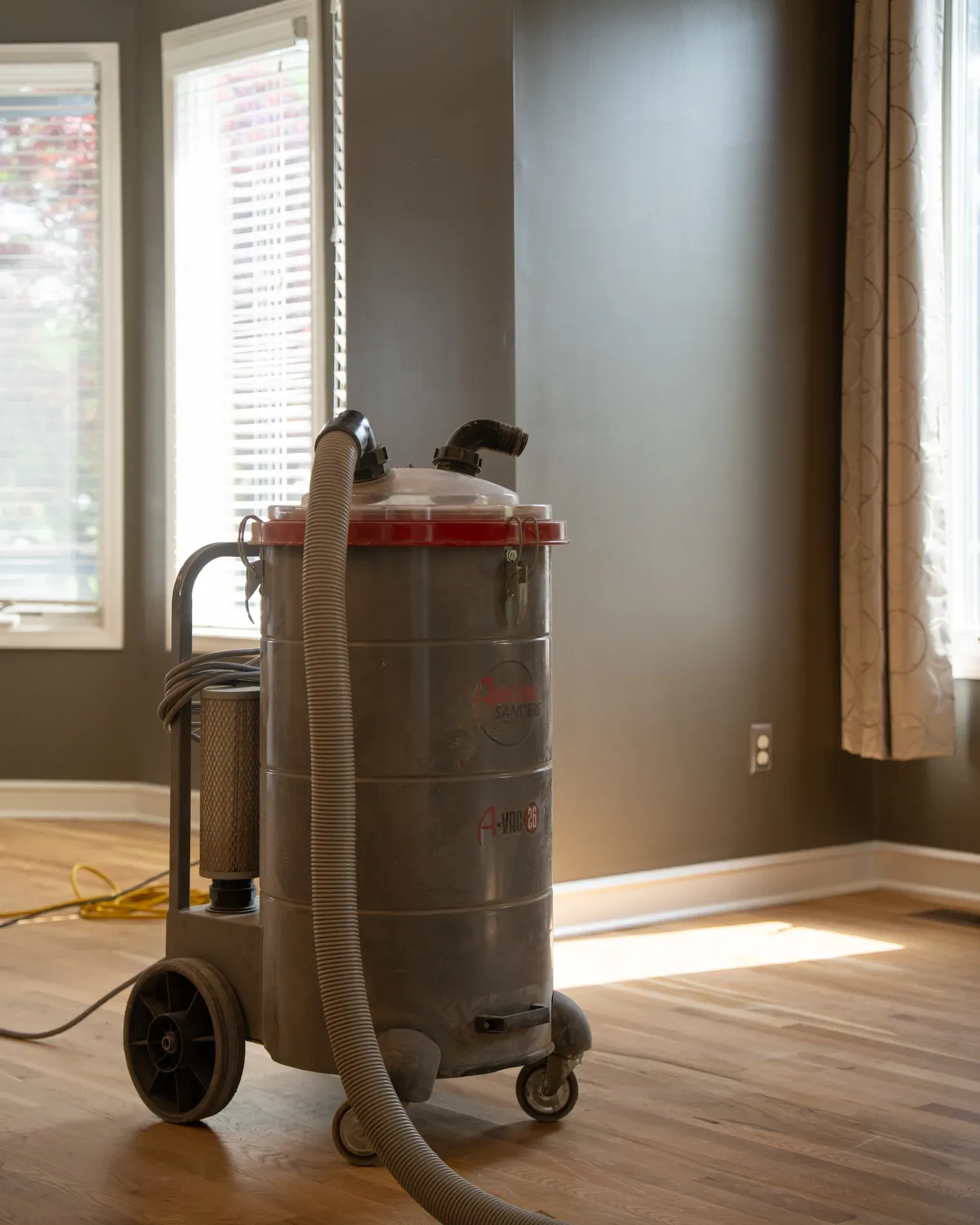
- Power. The sanding equipment needs electricity, and we will check outlet and panel access when we arrive.
- A final walk. We walk the floor with you to confirm the rooms, the stain color if there is one, and anything you want us to watch out for, such as a board you are worried about or a spot that used to squeak.
If you are staining, the color is approved on sample patches on your own floor, in your own light, before we commit. Our staining guide explains why that matters.
While the Work Is Going On
The work area belongs to the floor until we tell you otherwise. A few things that save headaches:
- Do not walk on a coat to check how it looks, even in socks. Footprints and lint end up sealed in.
- Keep doors to the work area closed and pets well away.
- Do not tape anything to the new finish. Tape can pull finish up when it comes off.
- Ask us anything. If something looks off between coats, it is far easier to address then than after the final coat.
The First Days After the Last Coat
A finish is dry long before it is cured, and most damage to a new floor happens in that gap. We give you the timing for the exact product used, but the general order is the same:
- Light foot traffic first, in socks, once we say the floor is ready. No shoes and no pets on it for the first stretch.
- Furniture next. Lift it, do not slide it, and put felt pads on every leg before it goes back down.
- Rugs last. Rugs trap the air the finish needs to cure, so they wait the longest. Waiting a little longer also lets the floor go through its first color change evenly, which why hardwood floors change color explains.
- Hold off on cleaning. Dry dust mopping only until the finish has cured. After that, use a cleaner made for finished wood floors, never a wet mop or a steam mop. Cleaning hardwood floors without wrecking the finish covers the routine.
Keep the house at normal temperature and humidity through the cure, too. Turning the heat off or opening the house up on a humid day slows it down.
Ready When You Are
We walk through all of this when we quote the job, so you know which rooms, what order and how long each stage takes before we start. Our complete guide to hardwood floor refinishing covers the work itself, and the hardwood floor refinishing page has the service detail. We refinish floors across the metro, including Leawood, Olathe and Liberty. Get a free estimate and we will lay out the plan for your house.
Get a Free Estimate
Have a floor you want looked at? We give honest, no-pressure estimates across the Kansas City metro.