Almost every estimate ends with the same question: how long is this going to take? It is a fair question, because the rooms being refinished are out of use while we work, and people need to plan around kids, pets, guests and work schedules. The honest answer to how long does it take to refinish hardwood floors has two parts. There are the days we are in the house working, and there is the time the finish needs afterward before furniture and rugs go back. Most people only think about the first part, and the second is where new floors get damaged.
The Stages of a Full Refinish
A full sand-and-finish job runs through the same stages every time. How long each takes depends on the floor, but the order does not change.
- Prep. Furniture out, any carpet or old flooring removed, the work area closed off. If you have done your part ahead of time, this goes quickly. How to prepare for hardwood floor refinishing lists what to do before we arrive.
- Repairs. Damaged boards replaced, loose boards secured, and gaps filled where they should be. A floor with no repairs skips this. A floor with pet damage or a patched-over wall opening can add real time here.
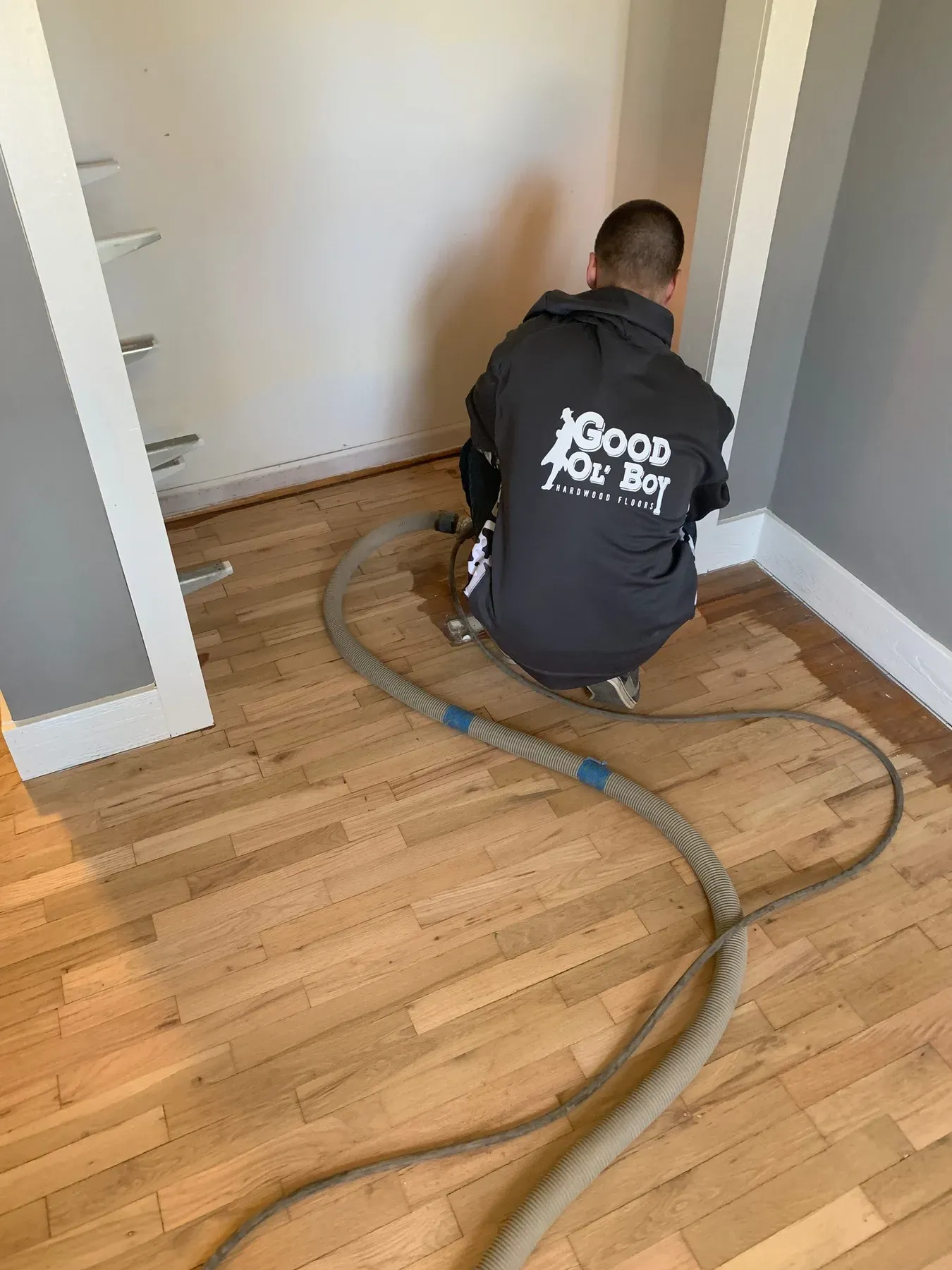
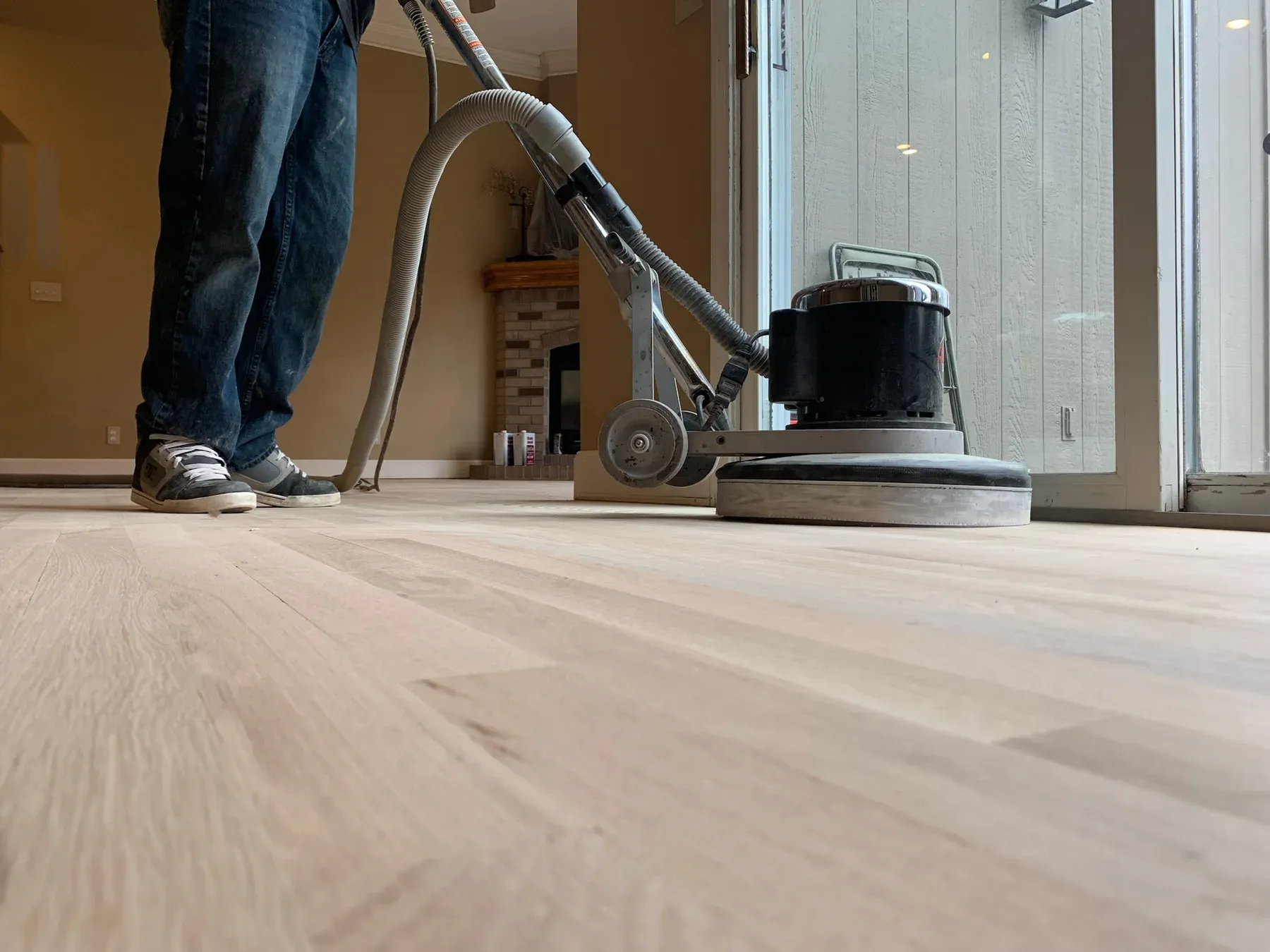
- Sanding. Several passes through progressively finer grits, plus edging along the walls and hand work in corners. This is the loudest and most physical part of the job.
- Stain, if you are staining. Sample patches get approved first, then the stain goes down and has to dry completely before any finish can go over it. Skipping the stain shortens the job.
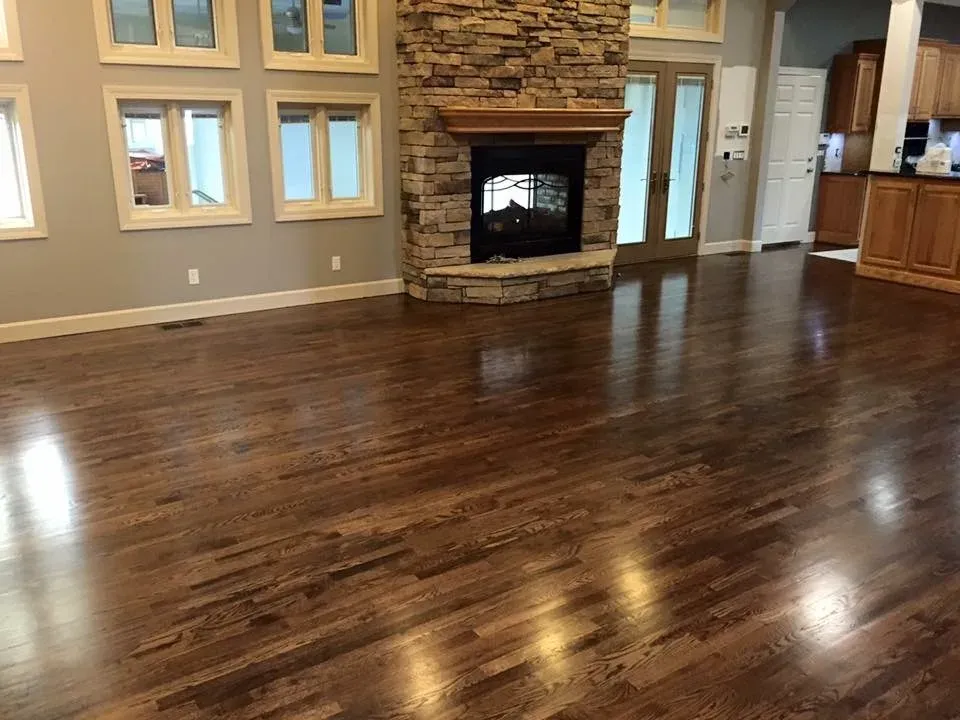
- Finish coats. Multiple coats, each one needing to dry before the floor is lightly abraded and the next one goes on. This is usually the longest stretch of the work, because the drying time between coats cannot be rushed.
For a few connected rooms with no major repairs, a full refinish is measured in days, not weeks. When we quote your floor, we give you the actual schedule for your rooms and your finish rather than a general range.
What Makes a Job Take Longer
The finish you choose. This is the biggest single factor. Water-based polyurethane dries faster between coats, so more coats can go down in less time. Oil-based polyurethane takes longer to dry between coats and much longer to cure. Water-based or oil-based polyurethane compares the two.
Staining. Stain adds its own application and drying time before the first coat of finish, and darker colors on some woods need extra care to come out even.
Weather and the house. Humidity slows drying, and a cold house slows it further. Keeping the heat or air conditioning running at a normal setting keeps the schedule on track. The best time of year to refinish hardwood floors covers what each Kansas City season does.
Size and layout. More square footage means more sanding, and a chopped-up layout with closets, hallways and doorways takes longer than one open room of the same size. Stairs are slow work, done tread by tread, largely by hand.
Repairs and surprises. Pet-stained boards, old water damage, or a floor that comes out from under carpet with a few problems all add time up front. We try to find these at the estimate so they are in the schedule from the start. Found hardwood under your carpet covers what tends to turn up.
After the Last Coat: Dry Is Not Cured
This is the part that matters most and gets the least attention. A finish is dry to the touch long before it has cured, meaning reached its full hardness. The floor can look finished and still dent, scuff or mark easily for a while. The general order is the same for every floor:
- Socks first. Light foot traffic in socks once we say the floor is ready, which is usually within a day of the final coat. No shoes and no pets yet.
- Furniture after a few days. Lifted into place, never slid, with felt pads on every leg.
- Rugs last. Rugs trap the air the finish needs to cure and can leave an outline in a soft finish, so they wait the longest, and longer for oil-based than for water-based.
- Gentle cleaning only. Dry dust mopping until the finish has cured. No wet mopping and never a steam mop. Cleaning hardwood floors without wrecking the finish covers the routine after that.
Because these times depend on the exact product, we give you the specific dates for your floor when the last coat goes down rather than a one-size-fits-all number.
A Recoat Is Much Faster
If your floor is worn but the finish has not worn through to bare wood, it may only need a screen and recoat. There is no sanding to bare wood and no stain, just a light abrasion of the existing finish and a fresh coat on top. It is a much shorter job, and the house is back in use sooner. Screen and recoat explains which floors qualify.
Can You Stay Home While It Happens?
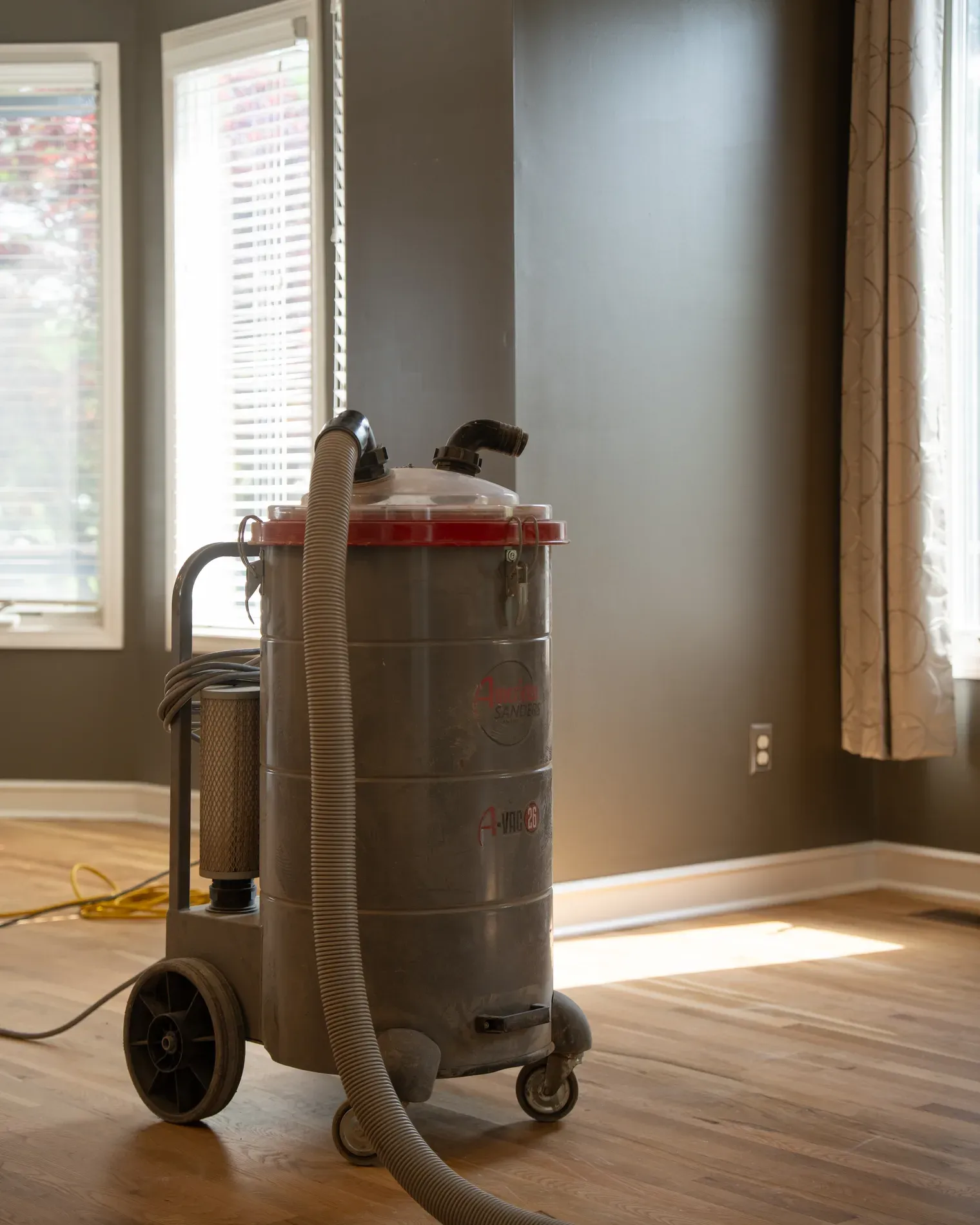
Usually yes, as long as the rooms being done are not the only route to bedrooms, bathrooms or the kitchen. We plan the order of rooms so there is a path through the house, and our dustless system keeps the sanding from coating the rest of the house. Some families choose a night or two away during the finish coats, especially with an oil-based finish because of the odor, or when the work covers the main hallway. Pets do better out of the house entirely for the whole job.
Get a Schedule for Your Floor
We refinish floors across the metro, including Kansas City, Olathe, Blue Springs and Smithville. Our hardwood floor refinishing page covers the process, and the complete refinishing guide goes deeper. Get a free estimate, tell us any date you are working toward, and we will lay out the schedule day by day.
Get a Free Estimate
Have a floor you want looked at? We give honest, no-pressure estimates across the Kansas City metro.