Somebody pulls up a corner of carpet in a closet, sees oak, and calls us the same afternoon. It happens all the time in this city, because for a few decades wall-to-wall carpet went over perfectly good hardwood in house after house. The good news is that a floor that spent those years under carpet was protected from sun, traffic and spills, and it usually has plenty of wood left. Refinishing hardwood floors under carpet is one of the most rewarding jobs we do, and most of what people find when the carpet comes up looks worse than it is.
Check Before You Pull It All Up
Before tearing out a whole room, look in a few places. A closet corner is the easiest, since it is out of sight if you change your mind. Lift the carpet off the tack strip with pliers, fold it back with the pad, and see what is underneath. Then check a second spot in another room or near a doorway, because floors were not always continuous. A hallway might be oak while a later addition is plywood, or a kitchen might have been patched with something else.
Heat registers are another good look. Lift the cover and you can often see the edge of the flooring and how thick it is. Solid strip oak, which is what most older Kansas City houses have, is thick enough to be sanded several times over its life.
What you are hoping to see is wood running continuously under the walls and through the doorways. What you do not want to see is a plywood or particleboard subfloor with no finished wood on top, which means the house was built for carpet from the start.
What You Will Find, and What It Means
Tack strip around the edges. The thin wood strips with upturned nails along every wall were nailed straight into the hardwood. When they come out they leave a line of small nail holes a few inches from the baseboard. Those holes are routine. They fill well and mostly disappear once the floor is sanded and finished, and along the wall they are often hidden by furniture anyway.
Staples, lots of them. Carpet pad was stapled down, often every few inches. Every one has to come out before sanding, because a staple left in the floor tears up sanding paper and can gouge the wood. It is tedious work, not difficult work, and it is part of our prep.
Pad stuck to the floor. Older foam and rubber pads break down over the years and can leave a crumbly or sticky layer bonded to the finish. Most of it scrapes up, and what is left comes off in sanding. It looks like a disaster and almost never is.
Paint along the edges. Before carpet, many floors were painted around the perimeter, or painters were careless knowing carpet would cover it. Paint sits on top of the old finish and sands off with it.
Dark stains. Gray and black marks under old carpet are usually water or pet urine that soaked through the pad into the wood. Some sand out. Some have gone too deep and the boards need to be replaced. Pet urine stains on hardwood floors explains how we tell the difference.
Surprisingly good finish. Sometimes the old finish under carpet is still in decent shape. Even then, the tack strip holes, staple marks and wear at the edges usually mean a full sanding is the right call rather than a recoat.
Problems That Change the Plan
Some finds go beyond routine prep, and it is better to know about them before the job is quoted:
- Missing or patched sections where a wall was moved, a heat register was relocated, or plumbing came through the floor. These are woven in with matching boards so the repair runs with the floor rather than sitting on top of it. Matching new hardwood to an existing floor covers how that works.
- A different floor in one room, often a kitchen or an addition, where the oak stops and something else starts. That might mean adding new hardwood so the rooms connect.
- Soft spots or boards that move, which can point to old water damage or a subfloor issue that needs attention before any sanding.
- A floor that was sanded hard in the past. If the tongue of the boards is close to showing at the seams, there may not be enough wood left for another full sanding. We check this at the estimate.
None of these mean the floor is a lost cause. They just change the scope, and the honest way to price the job is to see them first. Refinish or replace walks through where that line falls.
What Refinishing the Floor Involves
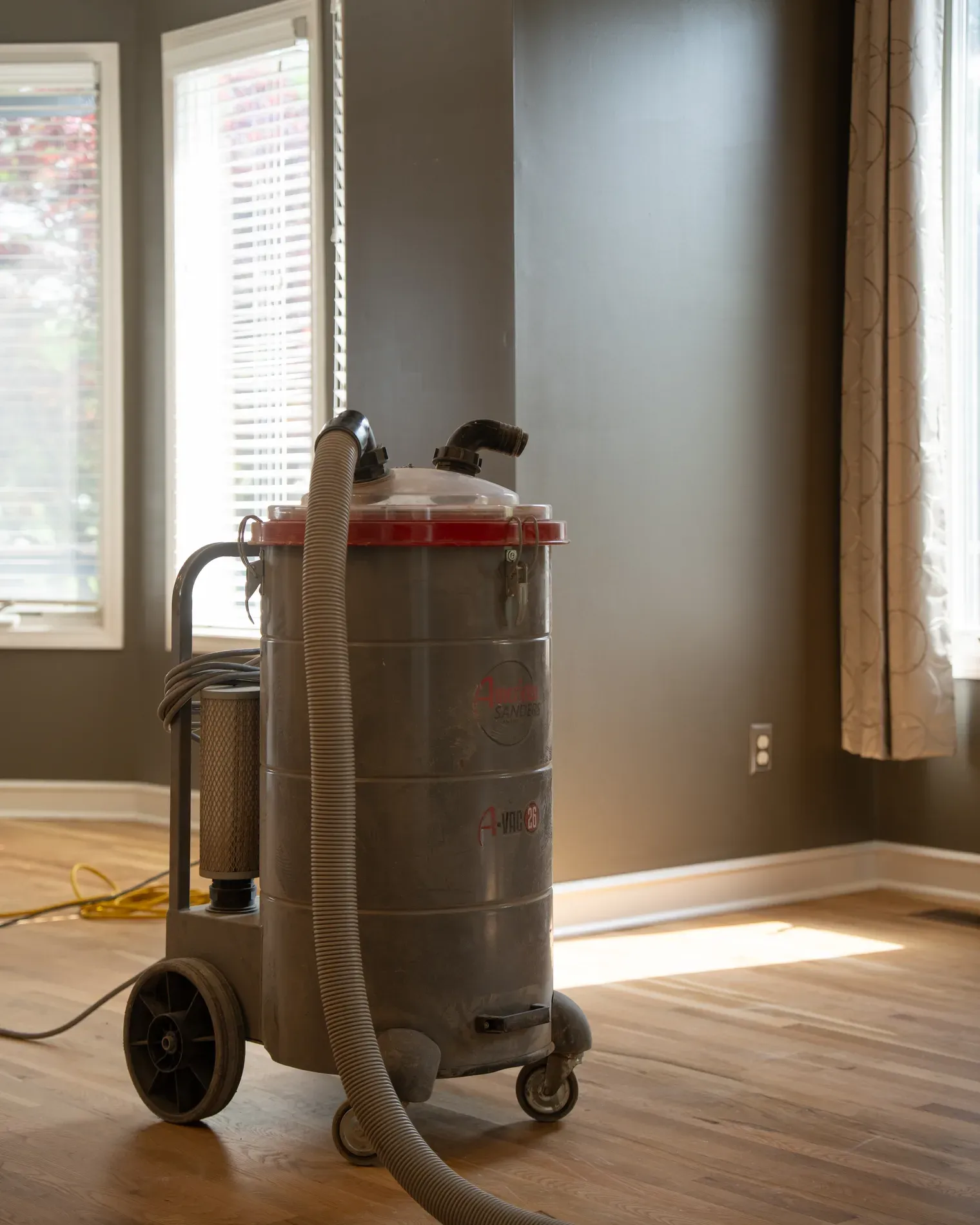
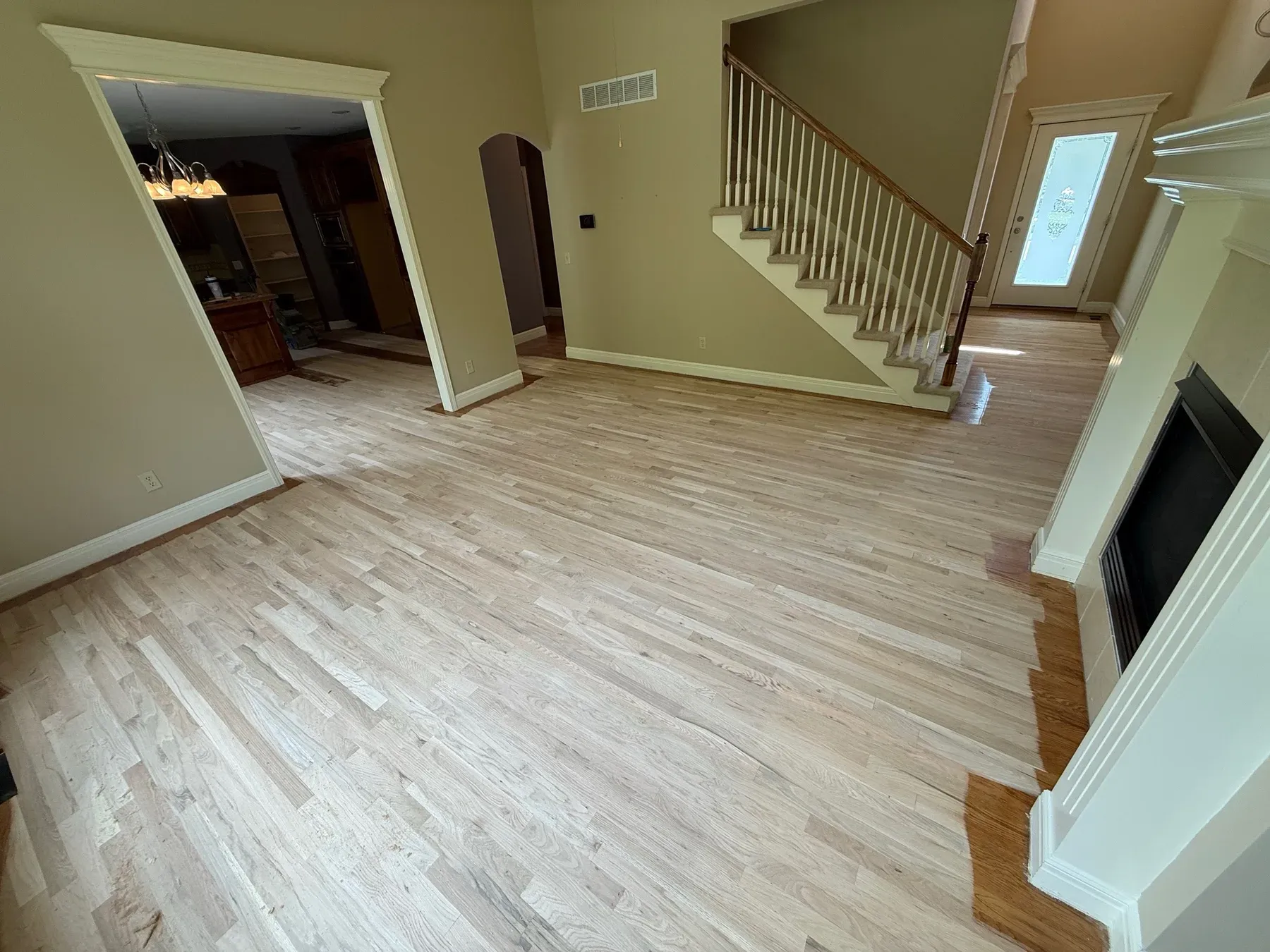
Once the carpet, pad, tack strip and staples are out, the job is a standard full refinish. Repairs and board replacement come first, then sanding through the grits to bare wood, filling, an optional stain, and finish coats. We run our dustless sanding system on every job, which matters a lot in an occupied house.
A floor that has been under carpet usually comes out a little lighter than people expect at first, because sanding goes down to fresh wood below the aged surface. It warms up again over time with light. If you want the floor darker or more even, now is the time to stain, since the wood is already bare. Our staining guide covers how we test color on your own floor.
We can handle the carpet removal as part of the job, or you can pull it yourself to save some of the cost. If you do it yourself, wear gloves, take the tack strip out carefully so you do not pry gouges into the floor, and leave the staples for us if you would rather not spend a weekend on your knees. Flooring removal covers the tear-out side of the work.
What About the Stairs?
Carpeted stairs in older houses often hide hardwood treads too, though not always. Some were built with lower-grade wood or plywood because they were always meant to be carpeted. Pull back the carpet on the bottom step to see. Refinishing hardwood stairs covers what we do when the treads are good and what the options are when they are not.
Plan the Timing
The easiest time to do this is before you move in, when the house is empty and the floors can be done all at once. If you are already living there, we plan the rooms in an order that keeps a path open. How long it takes to refinish hardwood floors breaks down the schedule.
Show Us What You Found
We refinish floors that come out from under carpet all over the metro, including Kansas City, North Kansas City, Liberty and Overland Park. See our hardwood floor refinishing and hardwood floor repair pages for how the work is done. Get a free estimate, and if you can, pull back a corner before we come so we can see the floor together.
Get a Free Estimate
Have a floor you want looked at? We give honest, no-pressure estimates across the Kansas City metro.