Once the wood is sanded and the stain is picked, there is one more choice before the finish goes down: how shiny the floor should be. Most people have a rough idea of whether they want it glossy or not, and not much more than that. But sheen decides a lot about how the floor will look on an ordinary Tuesday, with dust on it and a dog crossing it, so it is worth a few minutes of thought.
Here is how we explain matte vs satin vs gloss hardwood floor finish to clients when we are standing in the room with them.
What Sheen Is, and What It Is Not
Sheen is how much light the cured finish reflects. Lower sheens have flattening agents mixed in that scatter light instead of bouncing it straight back. The four common levels, from flattest to shiniest, are matte, satin, semi-gloss and gloss. Some lines add extra-matte or "nearly invisible" options at the very low end.
Sheen is not a measure of how tough the finish is. A good finish wears like a good finish in any sheen, and the difference between products is the chemistry, not the shine. Water-based vs oil-based polyurethane covers that part of the decision.
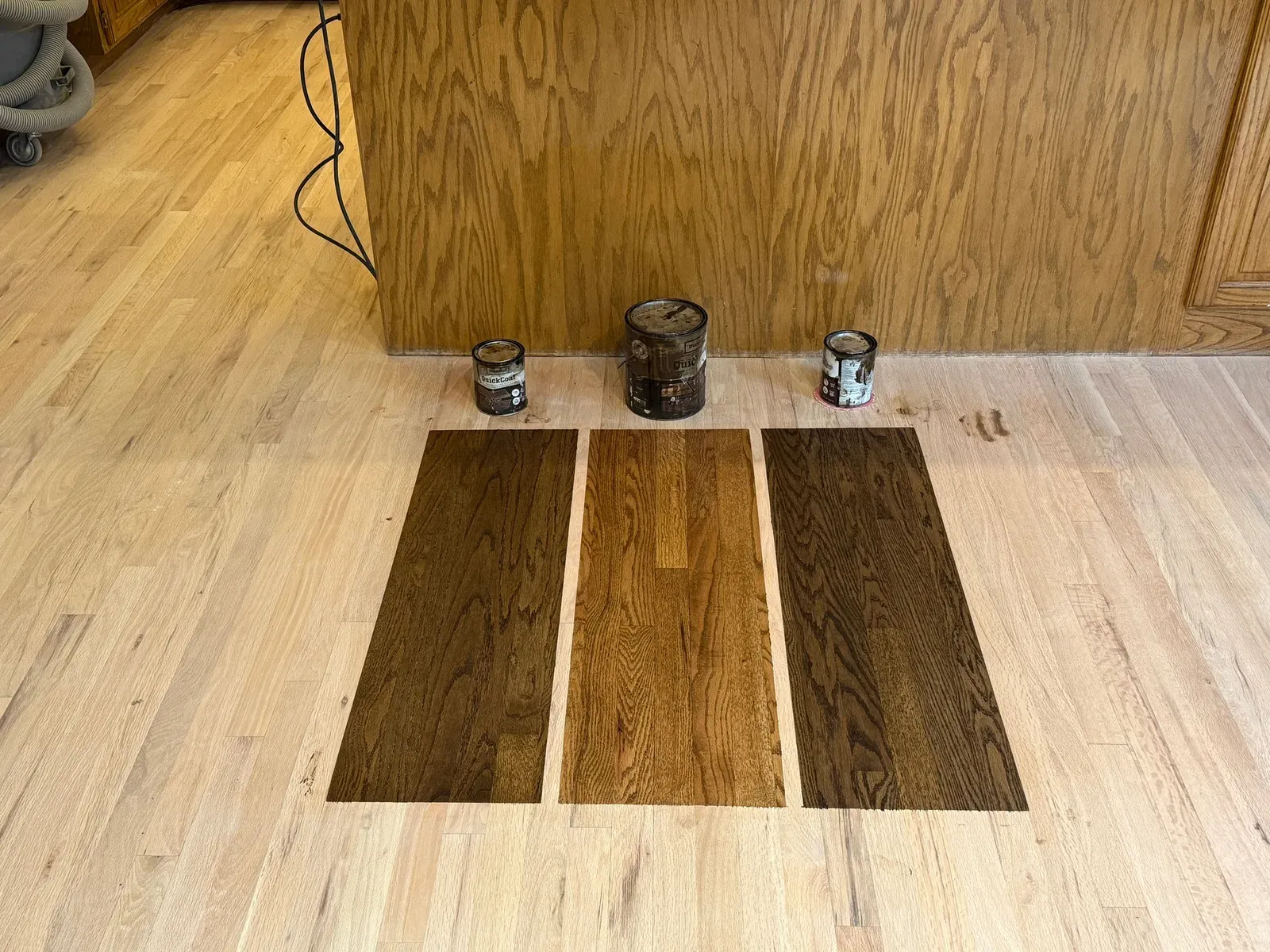
One thing to know before you shop: sheen names are not standardized. One brand's satin can look closer to another brand's semi-gloss. That is why we show sheen on a sample, in the product we will actually use, rather than going by the name on the can.
What Each Sheen Shows
- Matte. The closest thing to bare wood. Very little reflection, so scratches, dust and footprints are hard to see. It suits a modern, natural look and pairs especially well with white oak and light stains.
- Satin. A soft glow without a mirror. It is the most common choice for a reason: it gives the floor some life while still hiding most everyday wear.
- Semi-gloss. Noticeably reflective. The grain and color look richer and deeper, and scratches and dust show more.
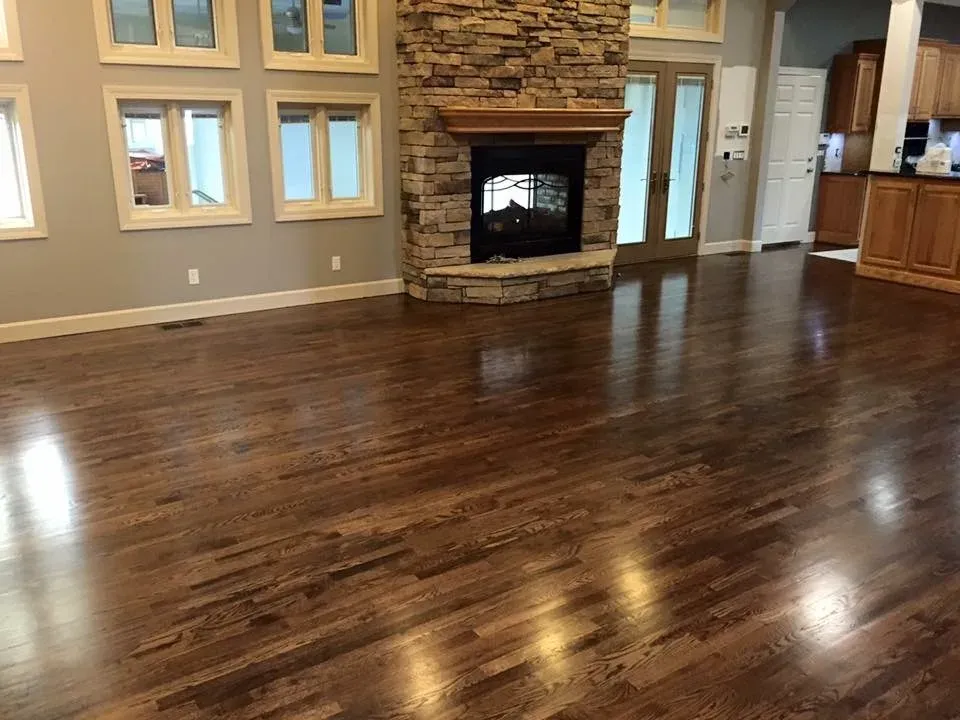
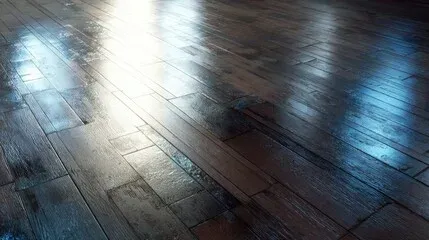
- Gloss. A traditional, formal shine that reflects windows and lights. It is striking in the right room and the most demanding to live with, since it shows every footprint, smudge and fine scratch.
Color and Light Change the Answer
The same sheen looks different on different floors and in different rooms.
Dark floors. A dark stain under a high gloss is the hardest combination there is to keep looking clean. Dust and pet hair show up pale against it, and every scratch catches the light. If you love a dark floor, a lower sheen makes it far easier to live with. Our staining guide covers how color choices play into this.
Light floors. Natural and light stained floors are forgiving in any sheen, because dust and fine scratches are close to the color of the wood.
Windows. Low, raking light from a big window shows the surface of a floor in detail. In a sunny room, a glossy finish shows every lap mark and dent along that light path. Satin and matte soften it.
Kids, Dogs and Busy Rooms
In a house with kids and dogs we nearly always steer toward satin or matte. A glossy floor in a busy house is not damaged any faster, it just shows the wear sooner, which means it looks like it needs a recoat earlier. The same goes for kitchens, entries and back halls. Hardwood floors and dogs explains why sheen matters more than most people expect with pets.
Gloss tends to make the most sense in rooms that see lighter use, like a formal living or dining room, and in houses where the owners like the look enough to accept the upkeep.
Keep It Consistent Across Connected Rooms
Floors that run into each other should usually share one sheen. A glossy hallway meeting a matte living room reads as a mistake at the doorway, even when both look good on their own. If you are refinishing only part of a house, we try to match the sheen of the floors that are staying.
Sheen is also not permanent. A screen and recoat puts down a fresh top coat, and that coat can be a different sheen, so a floor that turned out shinier than you like in daily life can be dialed down at its next recoat without sanding to bare wood.
What About Oil Finishes?
Hardwax oils are not a film on top of the wood, so they are naturally low sheen with a soft, flat look. They are their own system, with their own upkeep, and a floor finished in oil cannot just be coated with polyurethane later. If the matte, natural look is the main thing you want, ask about them alongside a matte polyurethane.
See It Before You Choose
The best way to decide is to look at a sample in your own room, in the morning and at night, from where you usually stand. Ask to see one at the estimate, and expect an honest contractor to talk you out of a sheen that will fight the way your house is lived in.
We refinish floors across the metro, including Kansas City, Leawood, Olathe and Blue Springs. Our hardwood floor refinishing and recoating pages cover both jobs. Get a free estimate and we will help you pick a sheen you will still like a year from now.
Get a Free Estimate
Have a floor you want looked at? We give honest, no-pressure estimates across the Kansas City metro.