It usually gets noticed on moving day, or when someone finally rearranges the living room. The rug comes up, and underneath is a clean rectangle of floor that is a different color from everything around it. Sometimes it is lighter, sometimes darker. Sometimes there are four little squares where a couch sat for ten years.
Nothing is wrong with the floor. Wood changes color when it is exposed to light, and anything sitting on it blocks that change. Here is why it happens, which floors do it most, and when hardwood floor discoloration from sunlight fades on its own versus when it takes sanding.
Wood Reacts to Light
Wood is not a fixed color. Ultraviolet light, and to a lesser extent ordinary visible light, slowly breaks down and changes compounds near the surface of the wood. Oxygen plays a part too. The result is a gradual color shift that starts the day a board is cut or sanded and slows down over time. The fastest change happens early, in the first months after a floor is installed or refinished, and then it settles.
The finish on top changes color as well. Oil-based polyurethane goes on with an amber tone and keeps deepening for years, while water-based finishes stay much clearer. On many floors, what people read as the wood changing is partly the finish. Water-based or oil-based polyurethane covers that side of it.
Which Way Your Floor Goes Depends on the Species
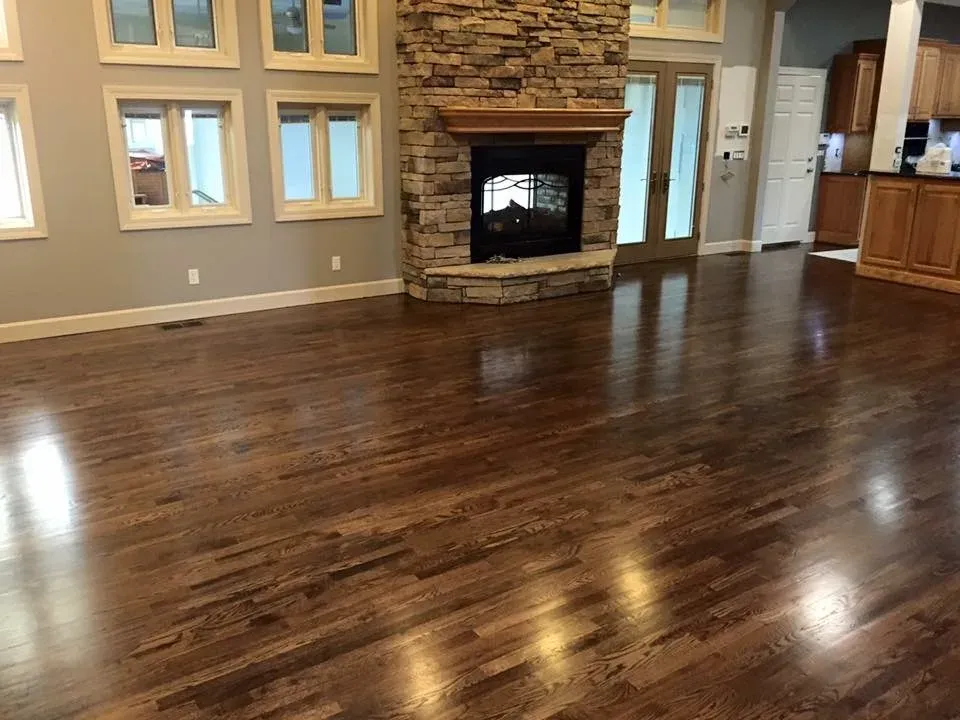
- Red and white oak warm up gradually, drifting toward honey and amber, especially under an oil-based finish. The change is moderate and most people never notice it except under a rug.
- Maple tends to yellow with age, which surprises people who chose it for its pale, clean look.
- Hickory warms and ambers somewhat, but its natural light-and-dark mix hides a lot of it.
- Walnut goes the other way and lightens toward a golden brown. Under a rug, it stays darker. Our walnut flooring guide covers that in more detail.
- Cherry and Brazilian cherry darken dramatically, often within months. A Brazilian cherry floor that starts out salmon-orange can turn a deep red-brown, and a rug shadow on one is very obvious.
Rug and Furniture Shadows
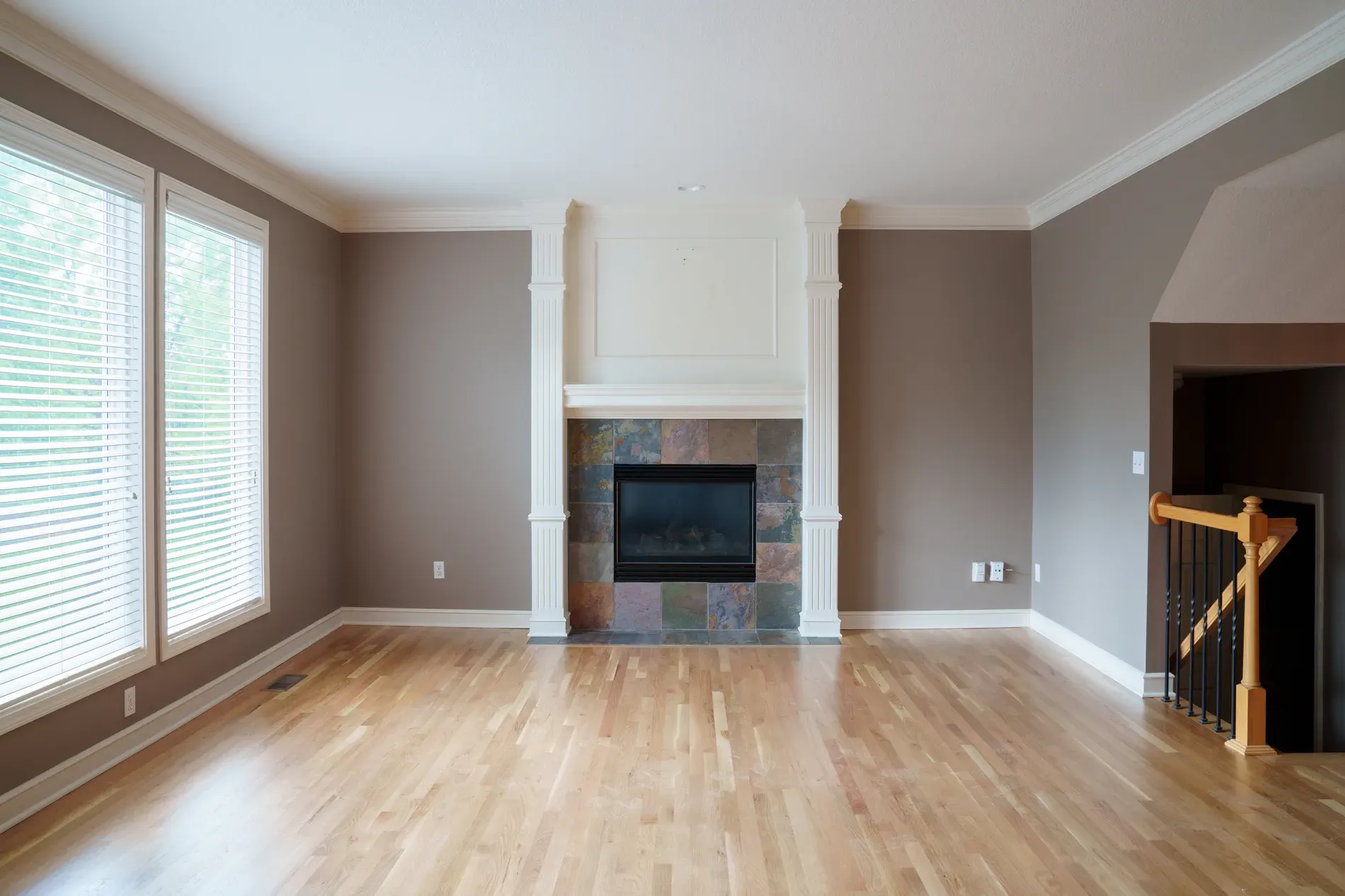
Anything that covers the floor blocks the light, so the wood underneath stays closer to its original color while the exposed floor keeps changing. The outline you see is not damage. It is the floor's original color next to its aged color.
The rug pad can add a second problem. Some rubber and vinyl backed pads react with floor finishes or trap moisture, leaving a pattern or a sticky film that is not about light at all. Use a pad made for finished hardwood floors, and if a pattern matches the pad's grid exactly, that is the likely cause.
Will the Outline Fade on Its Own?
Often, yes, and this is the first thing to try. Leave the rug off and the furniture moved, and let the uncovered area catch up. Light works on it the same way it worked on the rest of the floor, and on a floor that is only a few years old, the difference often softens or disappears in a matter of weeks to months, faster in a sunny room than a dim one.
On a floor that has been aging for a long time, or a species like Brazilian cherry that changes a lot, the shadow may fade but never fully match. The exposed floor has had years of head start.
When Sanding Is the Answer
Light-driven color change lives close to the surface of the wood and in the finish. A full sanding to bare wood takes both off, which is why a refinished floor comes out the same color edge to edge. That is the reliable fix when the outline will not fade, or when you are refinishing anyway for wear.
Two things to know. The freshly sanded floor will start changing color again, so the habits below still matter. And a screen and recoat will not fix a shadow, because it only adds finish on top of what is there. Our hardwood floor refinishing page covers the full process.
Is It Really Sun, or Something Else?
Not every discolored patch is a light shadow. A few look similar and need different fixes:
- Gray, dull traffic lanes from the kitchen to the back door are worn finish, not sun. When the finish wears through, bare wood picks up dirt and moisture and turns gray. That needs a recoat or a refinish depending on how far it has gone.
- Dark or black spots, especially near sinks, plants, pet bowls and doors, usually mean water or pet urine reached the wood. Those often go deeper than sanding can reach and mean replacing boards. Water damaged hardwood floors explains what to do.
- White haze or cloudiness is usually moisture trapped in or under the finish, or residue from cleaning products, rather than the wood changing color.
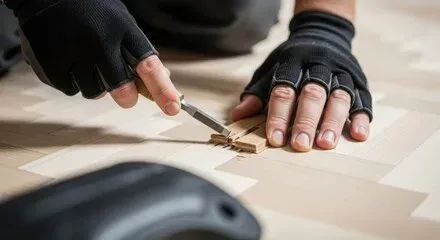
- A patch that is lighter than the floor around it after a repair is new wood next to aged wood. Patching an old floor without a visible seam covers why, and how it is blended.
Slowing It Down
You cannot stop a wood floor from changing color, but you can keep it changing evenly and more slowly:
- Wait on rugs after a refinish or a new install. Rugs need to wait until the finish has cured anyway, and leaving them off a little longer lets the floor go through its fastest color change evenly.
- Move things around. Shift rugs and furniture every so often, especially in sunny rooms, so no one spot is shaded for years.
- Manage the strongest sun. In Kansas City, rooms with big south and west windows take the hardest light. Blinds, curtains or UV-filtering window film during the brightest part of the day make a real difference. Many newer windows have low-E glass that already cuts much of the UV.
- Choose the finish with color in mind. A water-based finish keeps a pale floor pale. Some finishes include UV inhibitors, which slow the change but do not stop it.
Strong sun also heats and dries the boards right in front of a window, which can open wider gaps there in winter. Why gaps open every winter covers that side of it.
Getting a Straight Answer
If you have a shadow that will not go away, or a patch you cannot identify, we will look at it and tell you whether it is light, finish wear, water or something else, and whether it needs time, a recoat or a sanding. We refinish floors across the metro, including hardwood floor refinishing in Kansas City, Overland Park and Lee's Summit. Get a free estimate and we will give you an honest read.
Get a Free Estimate
Have a floor you want looked at? We give honest, no-pressure estimates across the Kansas City metro.