Most of the hardwood in Kansas City homes is oak, and most of the rest is hickory or walnut. Maple is the species people ask about when they want something lighter and calmer than oak, without the loud grain of hickory. It is a good floor. It is also the species most likely to surprise someone who expected it to behave like oak.
This is a straight look at maple hardwood flooring: how hard it really is, why it is so difficult to stain, how it changes color, and when white oak is the better call.
What Maple Flooring Is
Maple flooring is almost always hard maple, also called sugar maple, the same wood used for basketball courts, bowling lanes and butcher blocks. It is creamy white to light tan, with a fine, tight grain and very little of the open pore pattern you see in oak. Some boards show soft curly or birdseye figure, and the heartwood can run darker brown than the pale sapwood, so grade matters. Clear, uniform grades read almost like a solid surface. Character grades mix in darker heartwood and mineral streaks for a busier look.
Soft maple exists too, but it is noticeably softer and is more often used for furniture and cabinets than floors. If someone quotes you maple flooring, ask which.
How Hard Is Maple?
Hard maple rates around 1450 on the Janka hardness scale, against roughly 1290 for red oak, 1360 for white oak and about 1820 for hickory. So it sits a step above both oaks for dent resistance, which is why gyms use it.
Hard is not the same as unmarkable, though. Grit and furniture legs scratch the finish on a maple floor just like any other, and maple's smooth, even grain gives the eye nothing to look at except the marks. Oak's busy grain hides wear. Maple puts it on display, especially under a high sheen. For a house with dogs and kids, a satin or matte finish matters more on maple than on almost anything else.
Why Maple Fights Stain
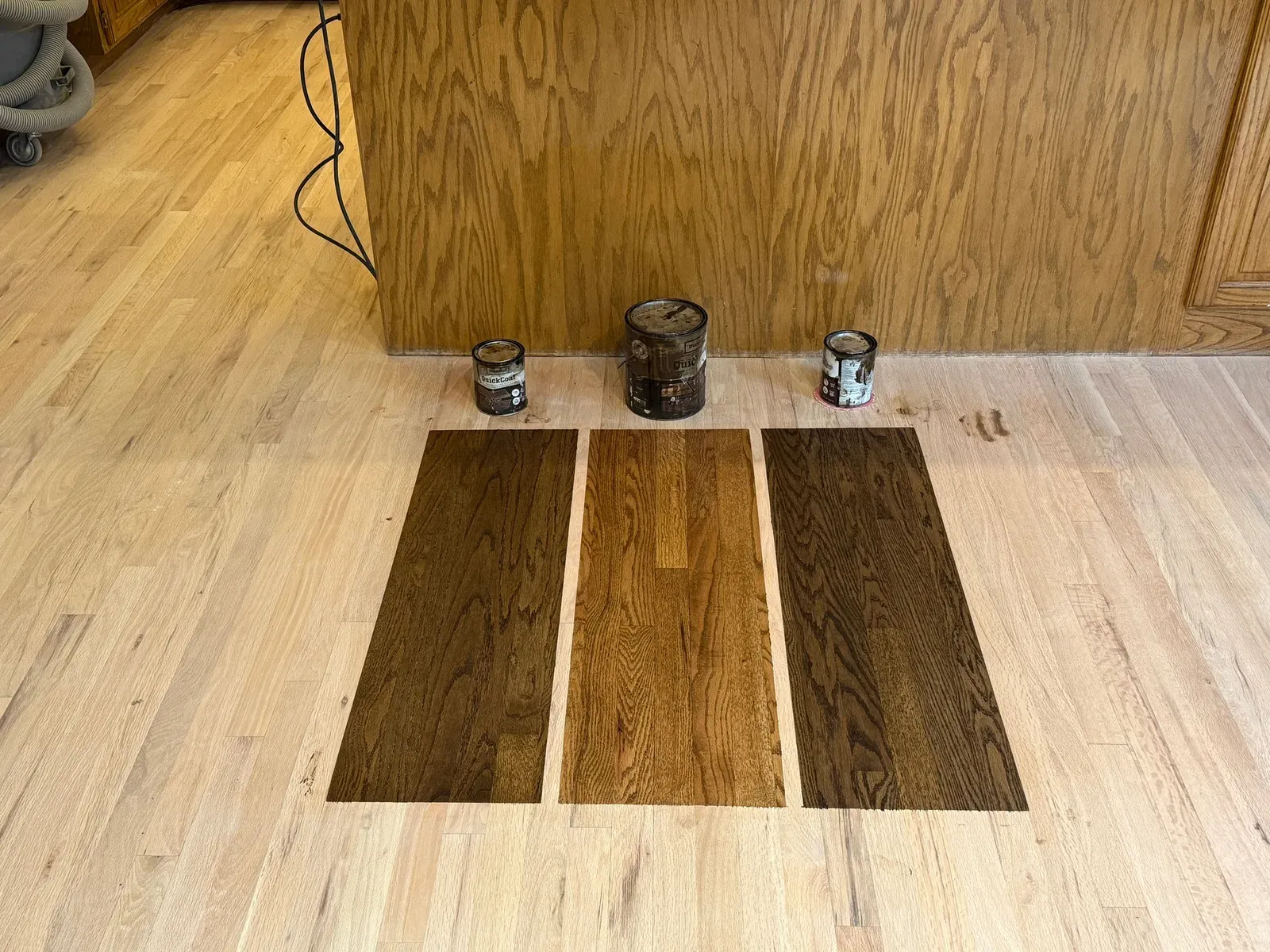
This is the big one. Maple is dense and closed-grained, and it does not absorb stain evenly. Some areas drink it in and others refuse it, so a medium or dark stain on maple tends to come out blotchy and muddy instead of rich. A stain color that looks great on an oak sample can look completely different on a maple floor. Our staining guide explains why every species takes color differently.
There are ways to color maple. A conditioner or sealer coat before stain evens out the absorption, and dye-based colors behave better than heavy pigment stains. Even then, the honest advice is that maple looks its best clear or very lightly toned, and every color has to be tested on sample boards of the actual floor before anything is committed. If you want a dark floor, start with oak or walnut rather than trying to talk maple into it. See wood staining and custom finishes for how we test colors.
Maple Yellows
People choose maple for its clean, pale look, and then a few years later notice it has gone warmer and more yellow. Two things are going on. The wood itself ambers with light exposure over time, and an oil-based polyurethane adds its own amber tone on top, which is very visible on a pale wood.
If you want maple to stay as close to its natural color as possible, a water-based finish is the usual choice, and you should expect some change from the wood regardless. Moving rugs and furniture now and then keeps the change even. Why hardwood floors change color covers how different species react to light, and water-based or oil-based polyurethane compares the two finishes.
How Maple Behaves Through a Kansas City Year
Like every solid wood, maple swells in our humid summers and shrinks in dry winters. What is different is how it looks when it does. A thin dark gap between pale boards stands out far more than the same gap in a medium oak floor, so the seasonal lines that most people never notice on oak can be very noticeable on maple.
The fix is the same as on any floor: acclimate the wood properly before installation, set the right expansion space at the walls, and keep the house's humidity in a reasonable range year round. Why gaps open in your hardwood floors every winter covers what is normal and what is not.
Sanding and Finishing Maple
Maple's density makes it less forgiving under a sander than oak. Every machine mark, every chatter line from a drum sander and every swirl from an edger shows on a pale, even surface where oak's grain would hide it. Dense maple can also burnish if the final grit is too fine, polishing the surface closed so it accepts finish or stain unevenly.
None of that is a reason to avoid maple. It is a reason to hire a crew that sands it carefully, with the right grit sequence and a final pass that leaves the surface clean and even. Hardwood floor sanding explains why the last pass decides how the finish looks.
Refinishing an Existing Maple Floor
Maple shows up in some older Kansas City homes, in kitchens, in basements finished as rec rooms, and very often in older commercial buildings, gyms and storefronts. A solid maple floor with enough wood left above the tongue refinishes beautifully. The same cautions apply: keep the color clear or close to it, choose the sheen for how the room is used, and expect the freshly sanded wood to come out paler than the aged surface you are used to seeing. Our commercial hardwood flooring guide covers maple in businesses.
Maple or White Oak?
- Choose maple if you want the palest, most uniform floor available, you plan a clear finish, and the room does not see a lot of grit and claws. It suits modern rooms, bedrooms and spaces where a calm, quiet surface matters most.
- Choose white oak if you want a light floor that can also be stained, toned or changed later, and that hides everyday wear better. It is the more flexible floor and the one most of our clients asking for a light, modern look end up with. See white oak hardwood flooring for the details.
- Choose red oak if budget and easy matching to an existing floor matter most. It stains evenly and is the most common floor in the metro. Our oak floors page covers both oaks.
Getting It Right
Maple is a floor that rewards getting the decisions right before the first board goes down: grade, finish, sheen and whether stain belongs in the plan at all. We install and refinish hardwood across the metro, including Kansas City, Leawood and Olathe. Our hardwood floor installation page covers how we install, and choosing hardwood flooring compares the species side by side. Get a free estimate and we will help you decide whether maple is the right floor for your house.
Get a Free Estimate
Have a floor you want looked at? We give honest, no-pressure estimates across the Kansas City metro.