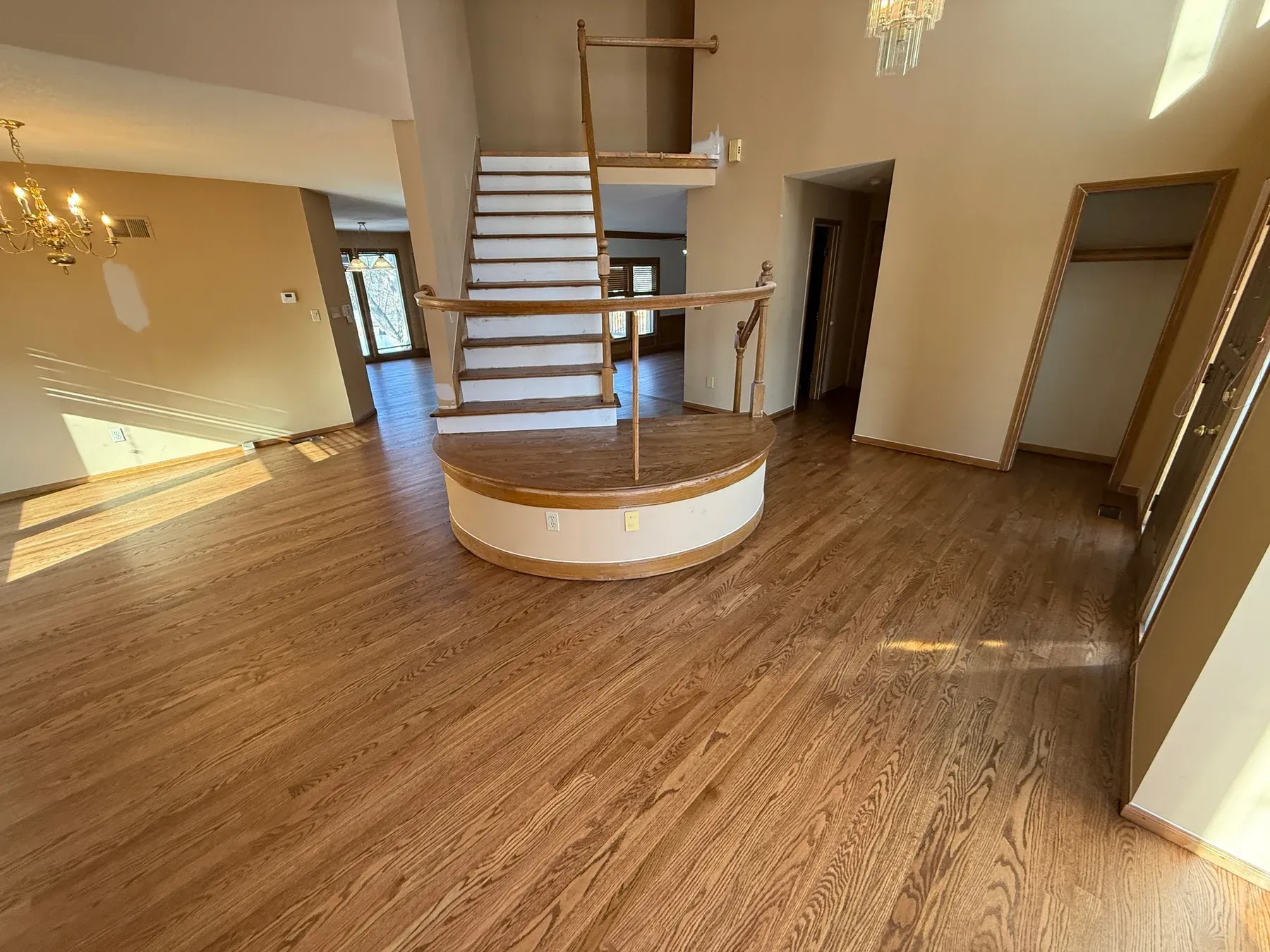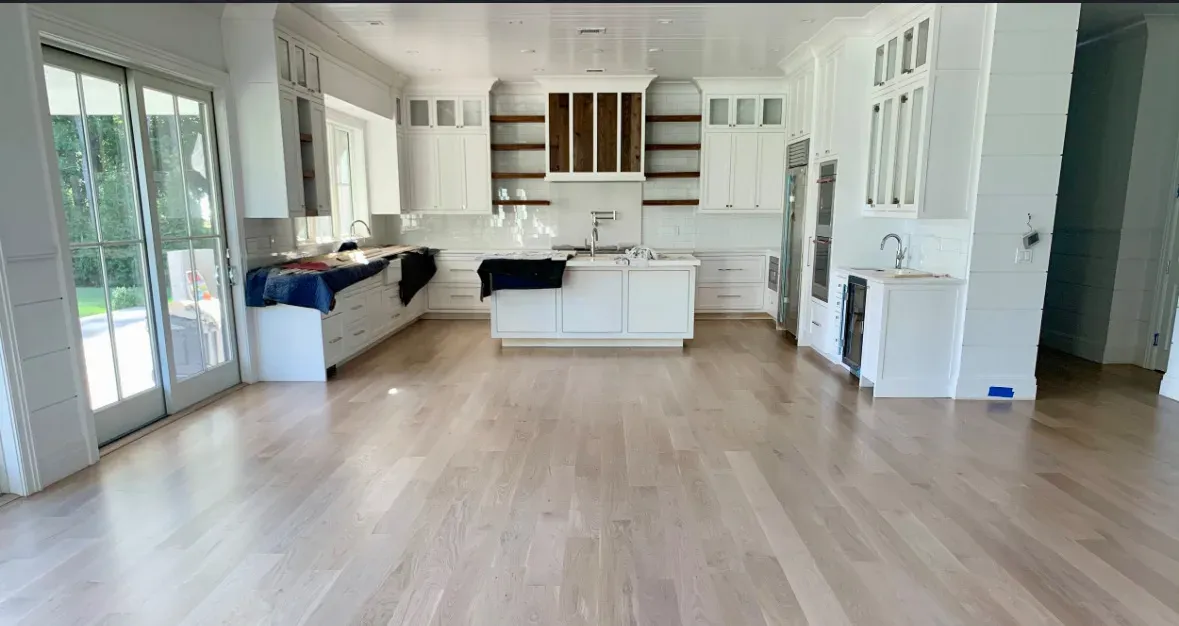
Walk through any new build or remodel around the metro and you will see it: long, wide boards, often in white oak, running the length of the room. Wide plank hardwood flooring has become the look many homeowners ask for when they call about installation. It is a beautiful floor. It also asks more of the installer and the house than the narrow strip floors most older Kansas City homes were built with.
What Counts as Wide
There is no official cutoff, but most people in the trade call boards five inches and wider wide plank. Many popular floors today run seven to ten inches. For comparison, the classic floor in older Kansas City homes is solid red oak strip about two and a quarter inches wide.
Width changes the room. Fewer seams mean the grain and character of each board show more. A wide floor reads calmer and more open, and it suits both modern and traditional homes when the species and finish fit.
Wider Boards Move More
Wood expands as it takes on moisture and shrinks as it dries, and most of that movement happens across the width of the board. The movement is a percentage of width, so a seven inch plank moves about three times as much as a two and a quarter inch strip. That has three practical effects:
- Winter gaps are bigger. When the furnace dries the house out, each board shrinks and the gaps between them show more. Why gaps open in winter explains the cycle.
- Cupping shows sooner. If moisture gets under a wide board, the edges rise more than they would on a narrow one. Cupping and crowning covers why.
- Mistakes are harder to hide. A wide floor installed too wet or too dry will show it across the whole room.
Solid or Engineered?
This is where width really matters. Engineered hardwood has a real wood top layer bonded to a cross-layered core, and that core resists movement. The wider the board, the more that stability is worth. For very wide planks, and for any wide plank going over concrete or in a basement, engineered is usually the better choice.
Solid wide plank can work well over a wood subfloor, and some homeowners want it for the thickness and the ability to sand it many times. It needs more care: proper acclimation, good humidity control and the fastening method the manufacturer specifies for that width, which often includes glue along with nails. Solid or engineered hardwood goes deeper on the trade-off.
If you choose engineered and want to be able to refinish it later, pay attention to the thickness of the wear layer. Can engineered hardwood be refinished explains why.
Species and Cut
- White oak is the most popular wide plank species by a wide margin. It is stable for its type, takes stain evenly and suits light, natural finishes. Our white oak guide covers it in detail.
- Hickory brings bold color variation that looks good on wide boards. See our hickory guide.
- Walnut is softer and darker, and a wide walnut floor is a statement. Our walnut guide has more.
How the log is cut also matters. Rift-sawn and quartersawn boards move less across their width than plain-sawn boards, which makes them a smart choice for wide planks if the budget allows.
Grade and Character
Wide boards show more of each piece of wood, so grade decides much of the look. Clear and select grades give a calm, even floor. Character and rustic grades bring knots, color streaks and mineral marks, which many people choose on purpose for a farmhouse look. Neither is better in quality. Look at full boards, not small samples, before deciding.
Installation Details That Matter More
- Subfloor flatness. Long, wide boards bridge over dips and humps instead of following them, which shows up as hollow spots and squeaks. Squeaky hardwood floors explains how that happens.
- Moisture readings. The subfloor and the flooring should be measured and brought close to each other before installation starts.
- Layout. Wide boards make the direction of the floor and the first row more obvious. Hardwood floor installation covers the layout decisions that are hard to undo.
- Prefinished or site-finished. Site-finishing lets the floor be sanded flat after installation, which helps with wide boards. Prefinished vs site-finished compares the two.
Living With a Wide Plank Floor
The single biggest thing you can do is control humidity. Holding the house roughly in the 30 to 50 percent range most wood flooring manufacturers ask for keeps winter gaps small and protects against summer cupping. In practice that often means a humidifier on the furnace for winter and good air conditioning or a dehumidifier in summer. Expect some seasonal change anyway. Small gaps in January that close in June are normal wood behavior, not a defect.
Talk It Through Before You Buy
We install hardwood across the metro, including Overland Park, Leawood, Olathe and Kansas City. If wide plank is on your list, bring it up early. See our hardwood floor installation service and the oak floors page, then get a free estimate and we will help you pick a width, species and construction that suit your house.
Get a Free Estimate
Have a floor you want looked at? We give honest, no-pressure estimates across the Kansas City metro.