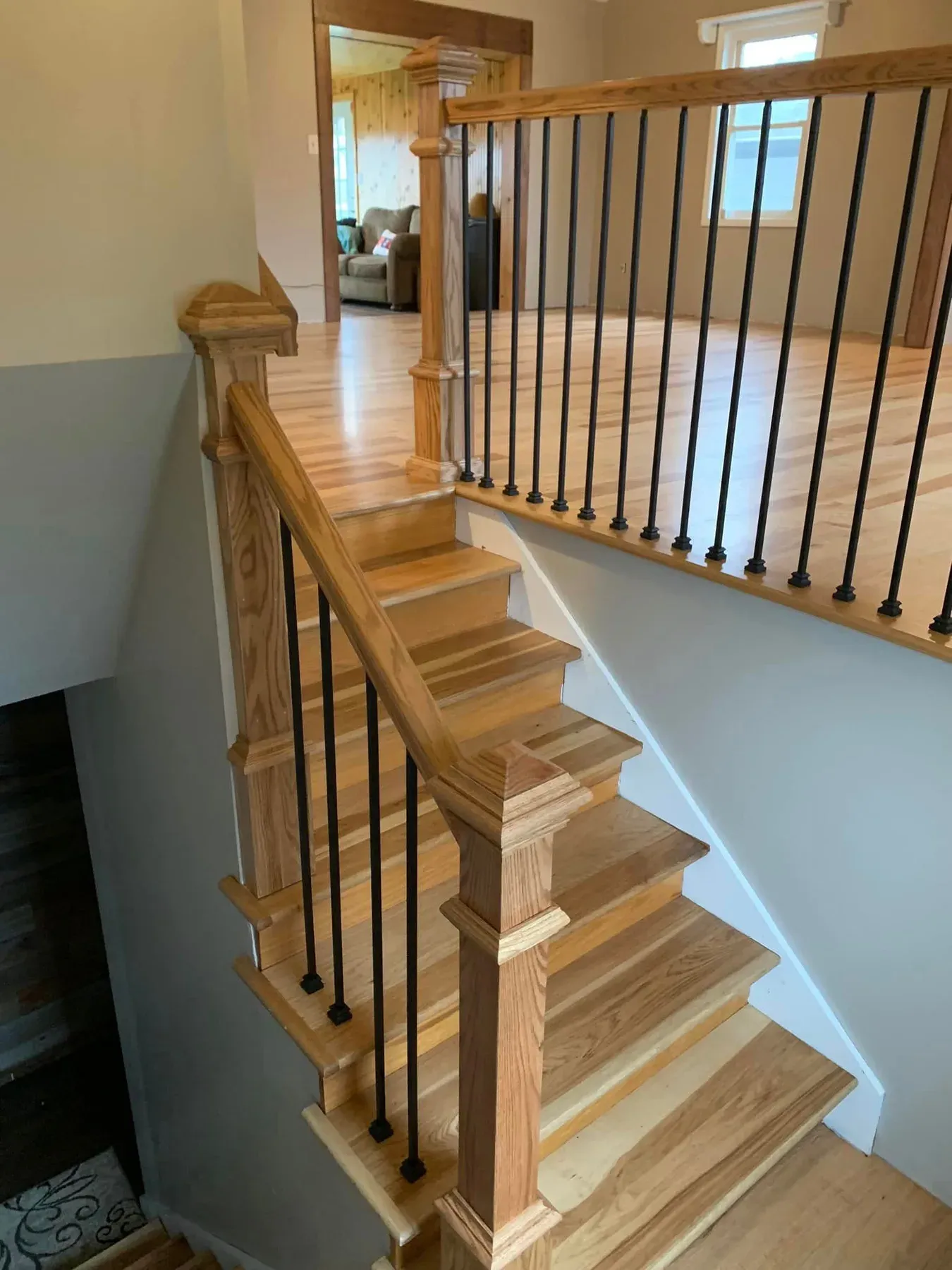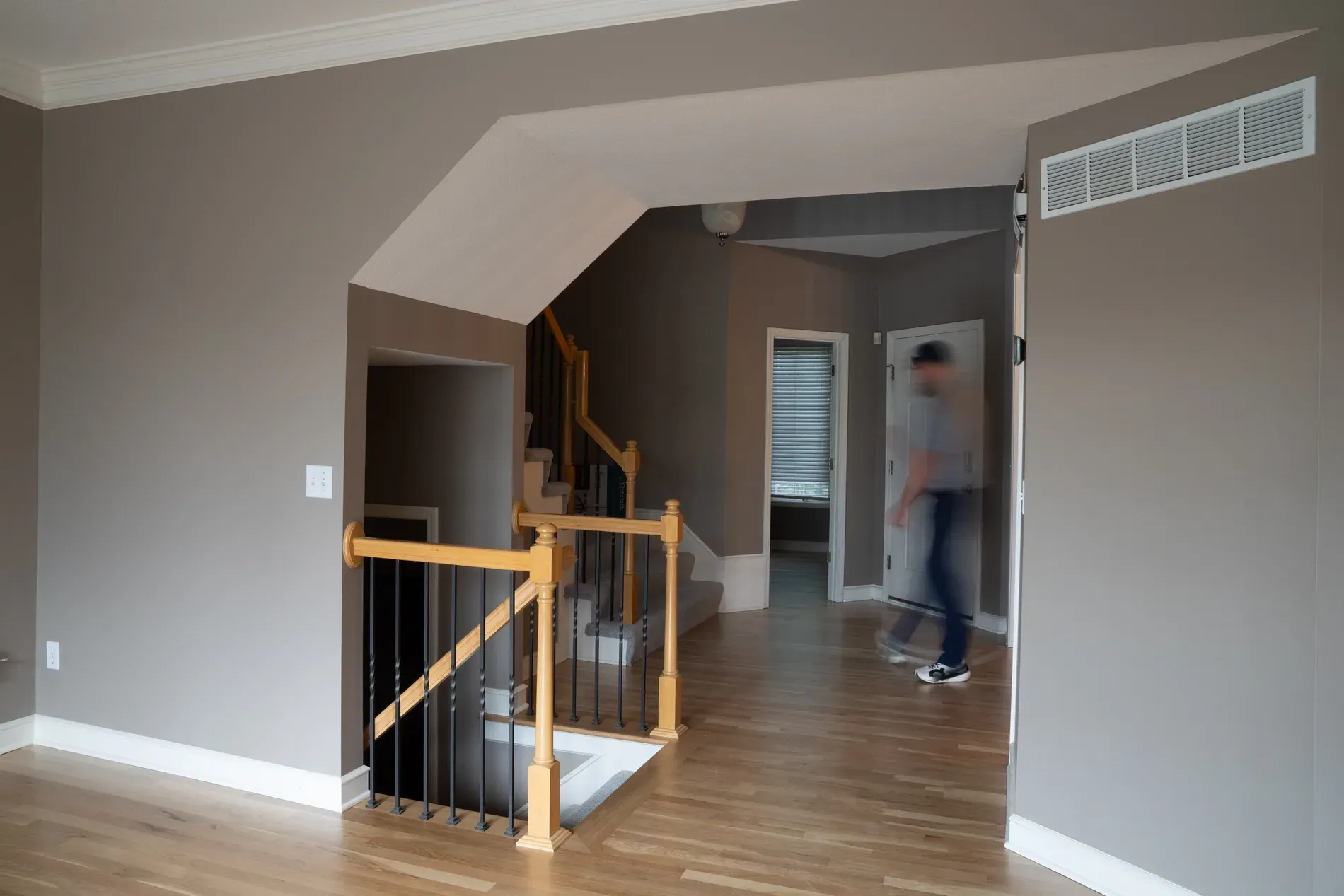
Walk into a lot of Kansas City homes built in the 1980s and 1990s and the first thing you see is the same staircase: carpeted treads, a golden oak handrail, rows of turned wood spindles and a matching newel post at the bottom. The floor may have been refinished, the walls repainted and the lights changed, and the railing still dates the house to the year it was built.
The good news is that a stair railing update rarely means rebuilding the stairs. Most of the change comes from the parts your hand and eye actually touch, and the structure underneath stays where it is.
Three Levels of Railing Work
Railing jobs fall into three sizes, and it helps to know which one you are asking for:
- Refinish what is there. The handrail, newel posts and wood spindles are sanded and refinished, often in a new color to match a refinished floor. The layout stays the same, the look changes.
- Swap the balusters. The wood spindles come out and iron balusters go in, and the handrail and newels are refinished or painted to suit. This is the most common update we do and it changes the look of the entry more than anything else for the work involved.
- Replace the system. New handrail, new newel posts and new balusters, usually because the rail profile is dated, the parts are damaged, or the layout is changing along with a remodel. Our custom staircases and handrails service covers full builds.
How a Baluster Swap Works
Wood spindles are usually held at the top in a groove or a drilled hole in the underside of the handrail, and at the bottom in the tread or in a shoe rail that runs along the stair. They come out one at a time without disturbing the handrail, as long as the rail and posts are sound.
Iron balusters then go in on the same spacing. Each one is cut to its own length, because every baluster on a staircase sits at a slightly different height against the slope of the rail. The top end goes into a hole in the underside of the handrail, the bottom is set into the tread or shoe rail and secured, and a small shoe slides down over the base to cover the hole. Any old holes that no longer line up get plugged, which is easiest when the treads and rail are being refinished anyway.
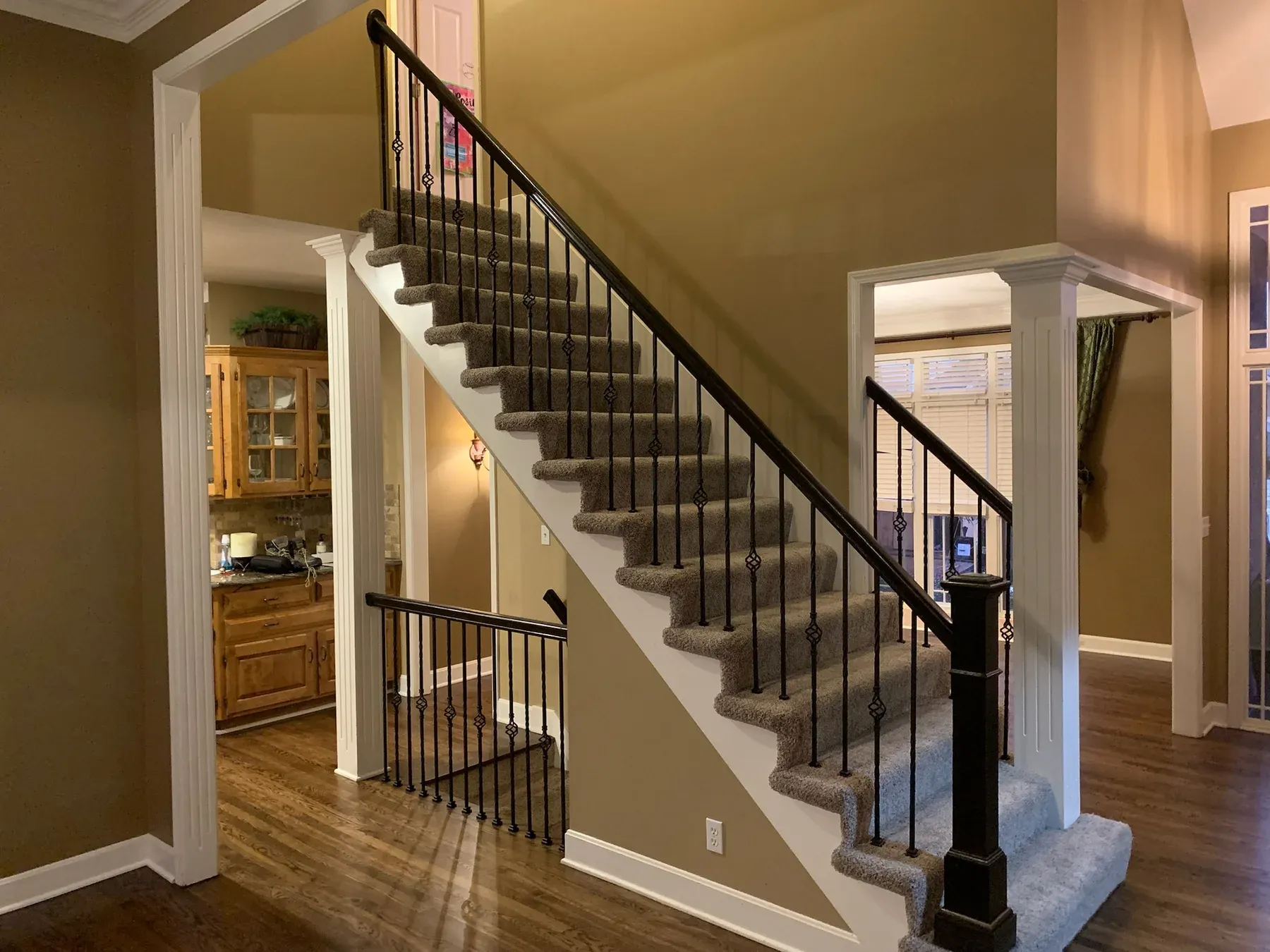
Where the staircase is carpeted, the balusters usually land on a wood shoe or knee wall that runs along the edge of the stair rather than in the treads themselves, which is the setup in the photo at the top of this page. That works well and leaves the carpet undisturbed.
Choosing Balusters
Iron balusters come in a handful of families: plain straight bars, bars with a single or double knuckle, baskets, twists and scrolls. A few pointers from doing a lot of these:
- Simple reads as more expensive. Plain bars, or plain bars with a knuckle every few balusters, tend to look right in more houses than a busy mix of shapes.
- Pick a repeating pattern and stick to it. Alternating two styles works. Mixing four usually does not, especially on a long run where the eye catches every break in the rhythm.
- Look at the whole view. The balusters are seen from the entry, from the landing above and often from the family room. Choose from where people will actually see them.
- Match the finish to the house. Satin black is the common choice. Bronze and oil-rubbed tones work well beside warmer wood.
Spacing and Safety
A railing is safety equipment before it is decoration. Under the residential building code most cities in the metro build to, openings in a guard have to be small enough that a 4-inch sphere cannot pass through, which is what keeps a small child from slipping between balusters. Handrails have rules on height and on how they can be gripped. Your city's code is the final word, and if a remodel changes the stair itself, a permit may be involved.
A baluster swap keeps the existing spacing or tightens it. It should never open it up. If the current spindles are spaced wider than they should be, which happens on older staircases, the swap is the time to correct it.
The Newel Post Carries the Rail
A wobbly handrail almost always traces back to the newel post, the heavy post at the bottom or at a turn that the rail is anchored to. Over years of being grabbed and leaned on, its fastening works loose. Until that is fixed, new balusters will not make the railing feel solid.
Most loose newels can be tightened with a proper mechanical connection to the framing, which sometimes means opening up the floor or the base of the post and closing it back up. When the post itself is the problem, or the style no longer fits, a new box newel or turned newel replaces it. The dark box newel in the photo above is a common modern choice, and it pairs naturally with iron.
Rail Color and the Floor
The single most common reason people call us about a railing is that they have refinished their floor and the old golden oak rail now clashes with it. There are two good answers.
Match the floor. The rail and newels are sanded and stained to the same color as the refinished floor and treads, so the whole stair reads as one piece of woodwork. The staining guide covers how colors are tested on real wood before anything goes on.
Contrast on purpose. A dark stained or painted rail and newel over white-painted risers and trim, with black iron, is the other common look. It works with almost any floor color because it is not trying to match it.
What does not work is almost matching. A rail two shades off the floor looks like a mistake.
Do It With the Treads
If you are also thinking about replacing carpeted stairs with hardwood treads, plan the two jobs together. Balusters on an open-sided stair usually go into the treads, so new treads and new balusters are laid out as one job and finished as one job. Doing the railing first and the treads later means drilling, plugging and refinishing twice. The hardwood stairs and stair treads guide covers the tread side, and refinishing hardwood stairs covers existing wood stairs.
The same goes for a floor refinish. Sanding the floor, treads, landing and rail in one project means one color decision, one finish and one period of living around the work.
Landings and Balcony Rails
Two-story entries usually have more railing than the staircase itself: an upstairs landing or balcony that overlooks the entry, with a long straight run of spindles. That run is often the most visible railing in the house and it needs to match the stair. When you count balusters for a quote, count those too.
Living Through the Work
A baluster swap is contained work. The stairs usually stay usable for much of the job, with some care while openings are between old and new parts, and the most disruptive part is finishing the rail and newels, which needs time to dry before hands go back on it. When the job also includes treads or a floor refinish, the schedule follows the larger job.
Getting It Done
We update railings across the metro, including stair railings in Kansas City, Overland Park and Leawood, and our hardwood stairs service covers the treads and risers. Get a free estimate and we will check the newel, count the balusters and tell you which of the three jobs your staircase needs.
Get a Free Estimate
Have a floor you want looked at? We give honest, no-pressure estimates across the Kansas City metro.