The Northland is not one kind of housing. Liberty was incorporated in 1829, which makes it one of the oldest incorporated towns west of the Mississippi, and the streets around its Courthouse Square include several historic districts of late nineteenth and early twentieth century homes. Parkville's downtown on the Missouri River bluffs dates to the 1840s and 1850s. North Kansas City incorporated in 1912, once levees along the river made large-scale building possible, and roughly one in five of its homes still predates 1940.
Around and between those older cores are decades of newer construction: Riss Lake and The National in Parkville, the growing family neighborhoods around Liberty, and lake homes out toward Smithville. So a question about wood floor refinishing in Liberty, Parkville or North Kansas City has two very different answers depending on which kind of house you are standing in.
Older Homes: Original Wood Worth Saving
Houses from before the Second World War almost always had solid wood floors, and north of the river that usually means oak, sometimes pine. A good share of them went under carpet decades ago and have been protected ever since. Pulling back a corner of carpet in a closet is the first step before planning anything.
What you find tells you a lot:
- Oak strip. Usually narrow boards, the same kind of floor found across older Kansas City neighborhoods. Durable, sands well and takes stain evenly.
- Pine. Softer, often in wider boards, and prone to dents and gaps. It can be beautiful refinished, but it will never be as hard as oak, so choose a finish and sheen that live comfortably with some character.
- Painted edges. Some older floors were painted or darkly stained around the perimeter where a rug once sat. That coating has to come off, and the wood underneath is sometimes plainer because nobody expected it to be seen.
The restoring old and damaged hardwood floors guide covers what comes back and what does not.
Measure Before Anyone Sands
The most important question on a century-old floor is how much wood is left. A solid floor can be sanded several times over its life, but a floor this old may already have been sanded more than once, and every pass takes a little. We check the thickness above the tongue at a floor register or threshold before quoting a full sanding.
If there is enough, the floor gets a full refinish. If it is getting thin, there are gentler options. We explain how that decision gets made in how many sandings a century-old floor has left, and the same rules apply north of the river.
Old finishes are the other variable. Early floors were often finished with shellac or varnish and then waxed for years. New finish will not bond over wax, which is one reason an old floor usually needs a full sanding rather than a recoat.
Older Floors Are Not Always Flat
A house that has stood for a century has moved. Joists settle, a wall comes out, a radiator or floor furnace is removed and leaves a patch. Older properties downtown and bluff-side homes in Parkville both tend to bring subfloor variation that is worth checking before a quote rather than discovering halfway through the job.
Loose boards get refastened, squeaks get addressed from above where possible, and old patches get cut out and replaced with matching boards laced into the floor so they disappear. Matching new hardwood to an existing floor walks through how that is done, and our hardwood floor repair in North Kansas City page covers the service.
Color on Old Wood
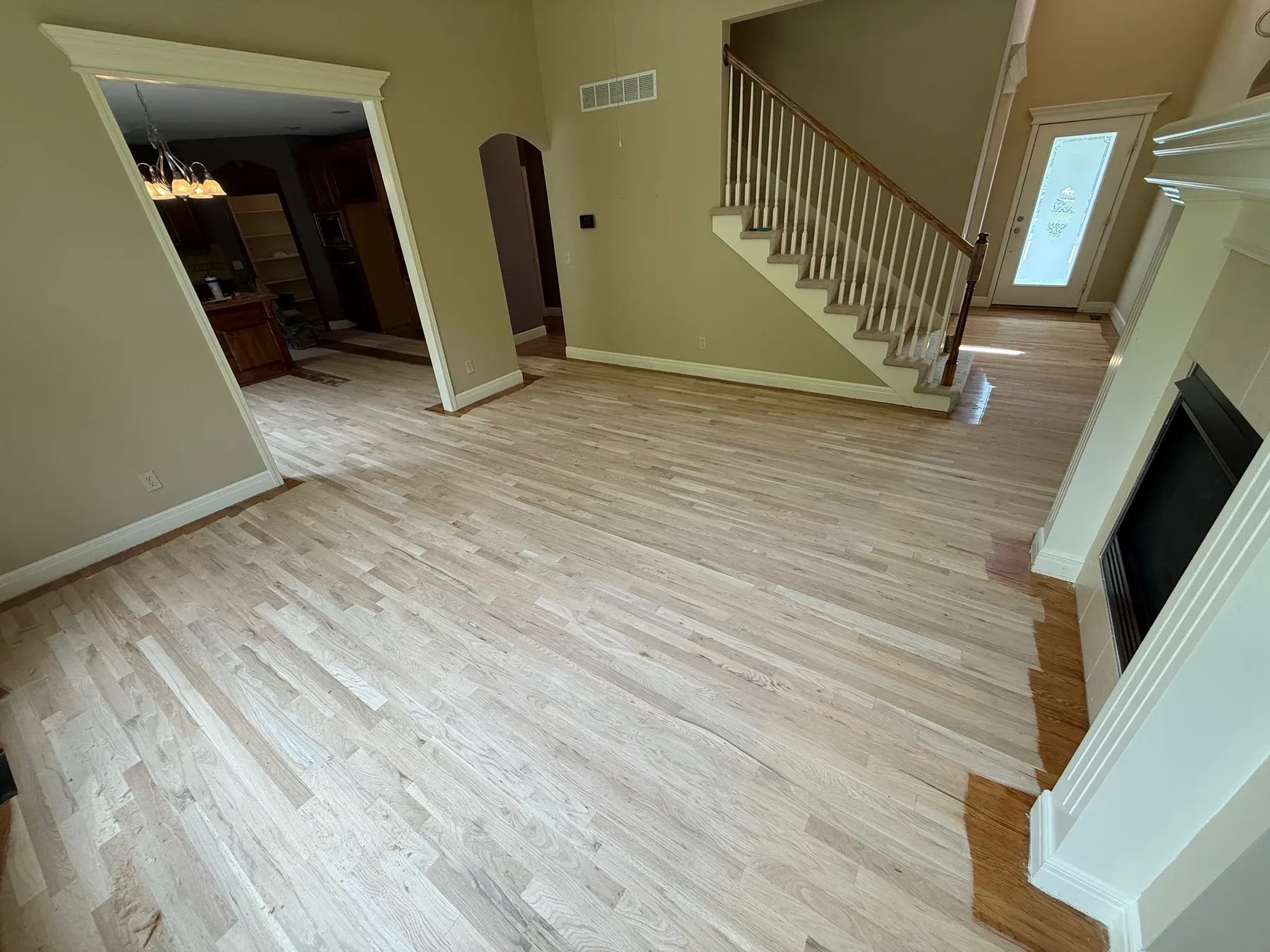
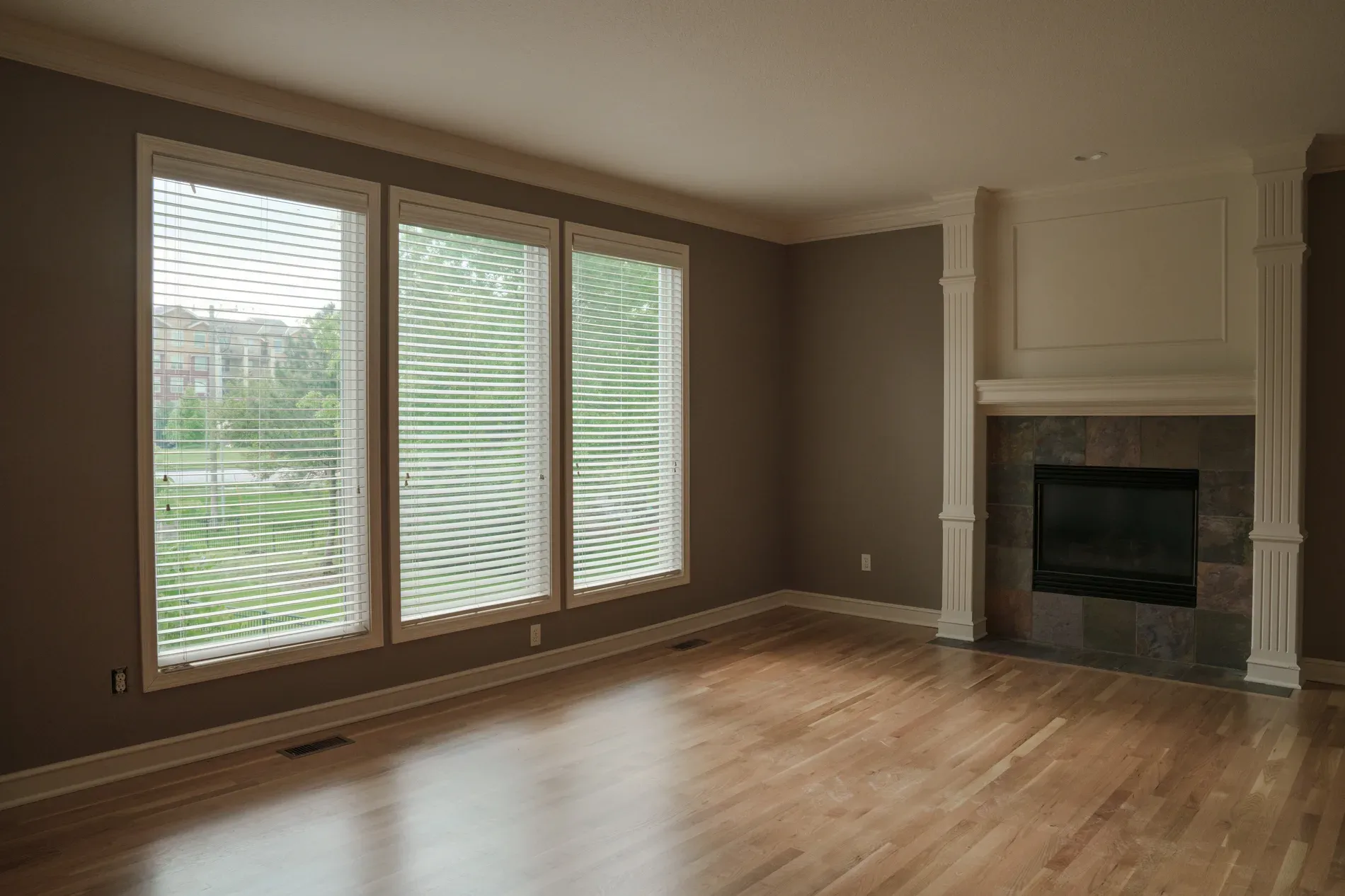
Old oak and pine have darkened with age under their finish, and that warmth is part of the appeal. Sanding cuts through to fresher wood, so a newly sanded old floor is often paler than people expect. A clear finish lets the natural tone deepen again over time, and a stain brings the warmth back right away.
Either way, we test colors on the sanded floor in your light before committing. In an older house it is worth leaning toward colors that suit the architecture rather than whatever is current in new construction. The staining guide explains how to choose.
Newer Northland Homes
The other half of the Northland is recent construction. Parkville's newer subdivisions, Liberty's growing neighborhoods and the lake homes around Smithville are where the conversation is about installation, recoating and choosing the right material rather than saving original wood.
Three things come up most often:
- Prefinished and engineered floors. Common in newer builds. Whether they can be sanded later depends on the thickness of the wear layer, which can engineered hardwood be refinished explains.
- Lower levels on concrete. Finished basements sit on slabs, where nailed solid hardwood is not an option and engineered flooring is. The solid or engineered guide covers that choice.
- Lake and outdoor living. Sand, wet feet and pets in and out all summer are hard on a finish. A durable finish, a lower sheen, good mats at every door and a regular recoat matter more here than the fashionable color.
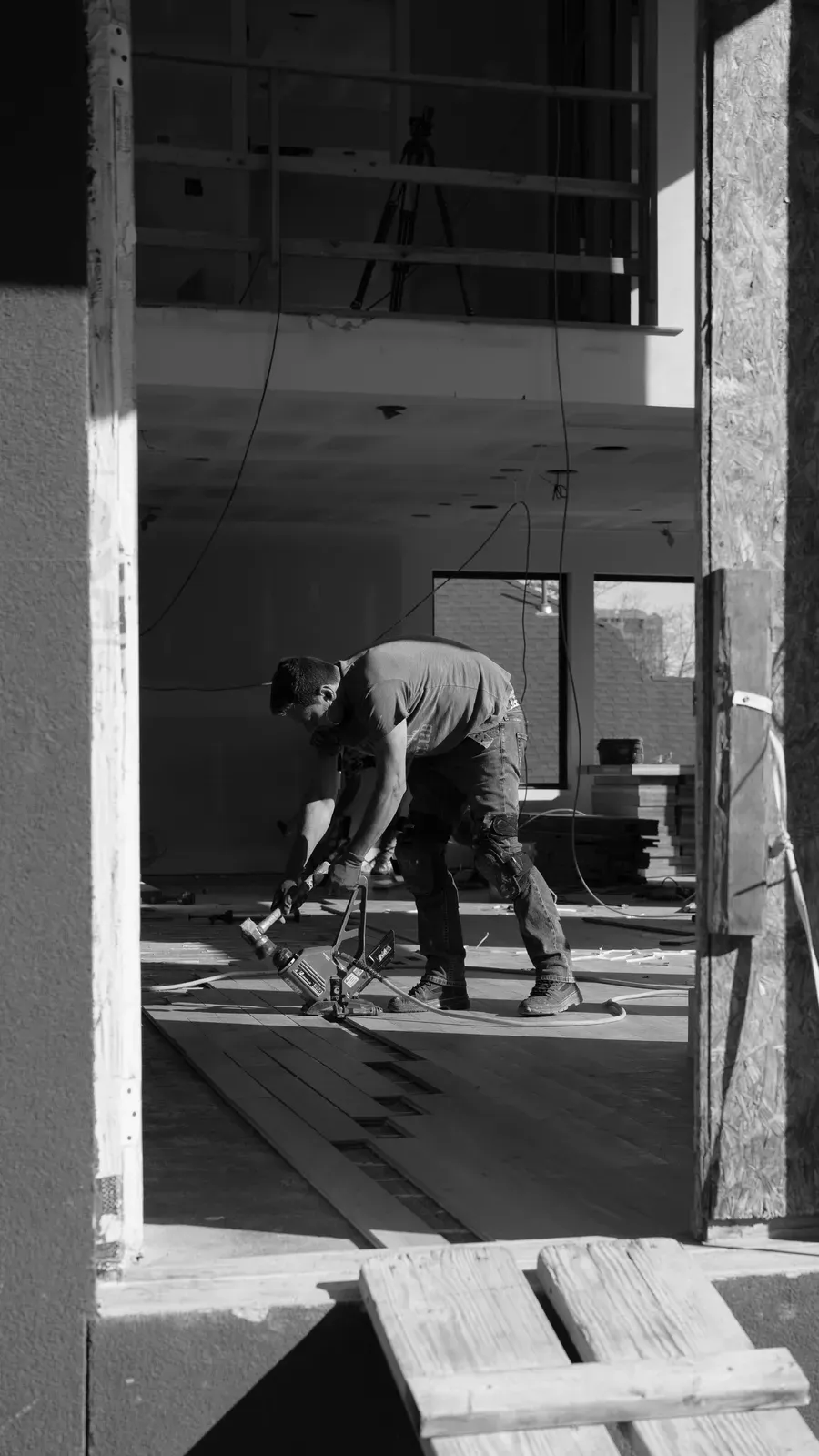
If you are putting in a new floor, our hardwood floor installation in Liberty page and the installation guide cover what to expect, including why acclimation matters with our humid summers and dry winters.
Where We Work North of the River
We refinish, repair and install hardwood throughout the Northland, including Liberty, Parkville, North Kansas City, Platte Woods and Smithville. See hardwood floor refinishing in Parkville for the service detail. If you have found an old floor under carpet, or have a newer one that has lost its shine, get a free estimate and we will tell you straight what it needs.
Farther north, the Victorian homes of St. Joseph raise their own questions, covered in refinishing historic hardwood floors in St. Joseph.
Get a Free Estimate
Have a floor you want looked at? We give honest, no-pressure estimates across the Kansas City metro.